 (Image source: Gemini)
 You have probably heard the rumors about the reservation situation at Zahav. People wake up before dawn, or at least before their second cup of coffee, just to refresh a booking app at exactly 11:00 AM. It sounds like the kind of hype that usually leads to disappointment, doesn't it? But here is the thing about this Philadelphia staple: it actually lives up to the noise. Sixteen years after Michael Solomonov and Steve Cook first opened the doors in Society Hill, Zahav remains the gold standard for what a modern restaurant should be.
It is not just a place to eat; it is the restaurant that fundamentally changed how Americans think about Israeli food. Before Zahav, many people thought of Middle Eastern cuisine as a quick pita wrap or a scoop of grocery store hummus. Solomonov changed that narrative by blending ancient traditions with high-end technique. The result is a dining experience that feels both incredibly sophisticated and as warm as a Sunday dinner at a friend's house.
The Architecture of Flavor and Modern Israeli Cuisine
When you sit down at Zahav, you are participating in a menu that has been refined over nearly two decades. The current format is a four-course tasting menu priced at $90 per person.⁴ It is a streamlined way to experience the hits without having to stress over a massive a la carte list. You generally choose between two paths: the Al Ha’esh, which focuses on charcoal-grilled skewers, or the Mesibah, which features the legendary slow-roasted lamb shoulder.
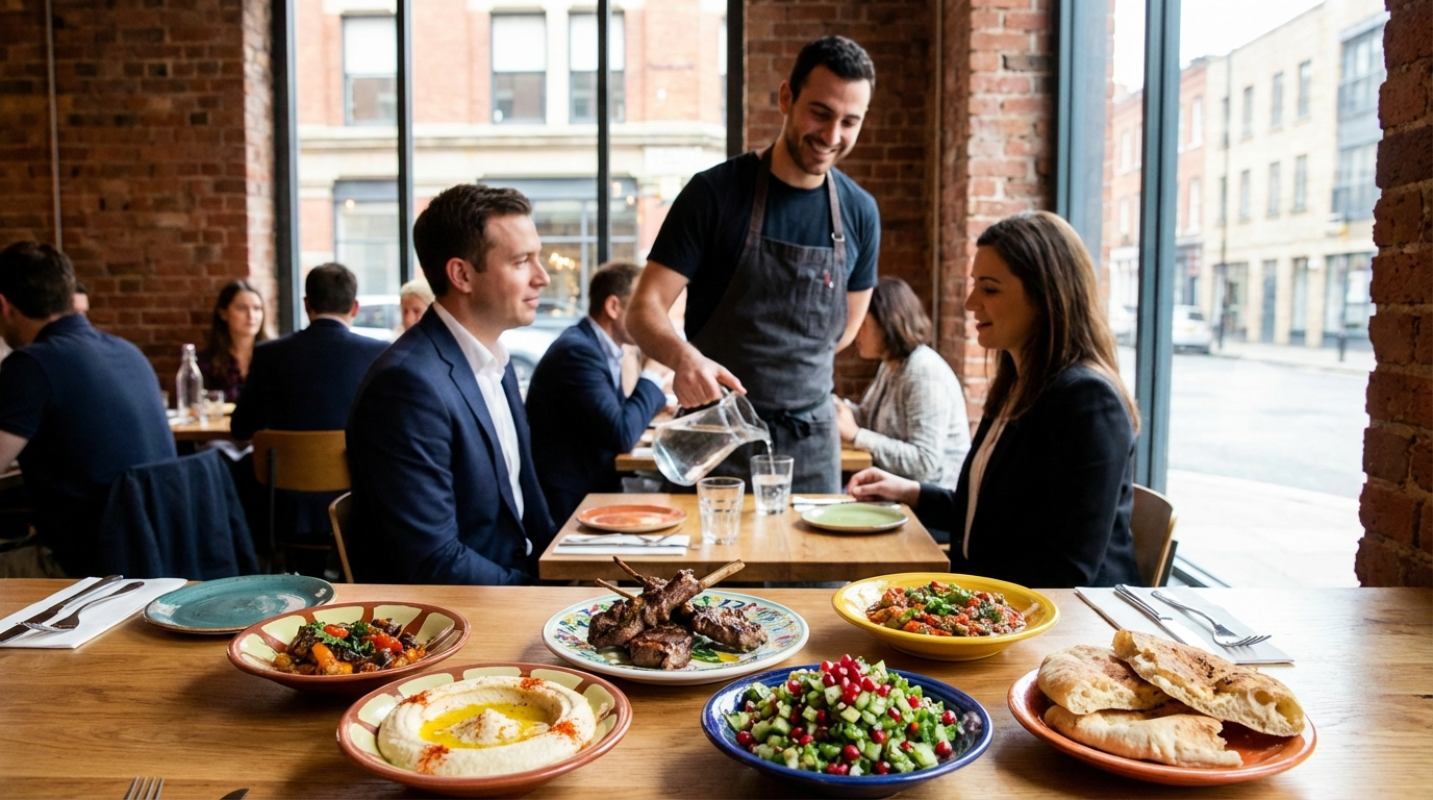
The meal always begins with the Salatim. This is a parade of six seasonal vegetable salads that hit the table all at once, accompanied by wood-fired laffa bread that is usually still steaming. You might see Moroccan carrots seasoned with Aleppo pepper or beets coated in rich tehina. Along with this comes the hummus-tehina, which is quite possibly the smoothest version of the dish you will ever encounter. It is the foundation of everything they do.
As the meal progresses, you see how the kitchen interprets regional traditions through a contemporary lens. In recent seasons, they have been experimenting with things like local figs paired with savory veal or a dry-aged duck served with a duck fat pilaf. These dishes show a kitchen that refuses to stay still. They use pomegranate molasses, za'atar, and mountains of fresh herbs to create layers of flavor that feel bright and urgent rather than heavy.
The centerpiece for most diners remains the Pomegranate Lamb Shoulder. It is braised until the meat is ready to fall apart if you even nudge it with a fork, then finished on the grill for a bit of smoky crunch. Served over crispy Persian rice with chickpeas, it is the kind of dish that people talk about for years after their visit. It represents the soul of the restaurant: bold, communal, and deeply satisfying.
The Secret Sauce of Zahav Service
You can have the best food in the world, but if the service is cold or chaotic, the magic disappears. Zahav has managed to avoid the "stale" trap that catches many famous restaurants. In fact, critics often describe the operation as a well-oiled machine that still maintains its heart.² This balance is intentional. After winning the James Beard Award for Outstanding Restaurant in 2019, the team doubled down on professionalizing their hospitality without losing their warmth.
One of the most impressive things about the service is the staff retention. The General Manager, Okan Yazici, famously started as a busboy and worked his way up over a decade. This promote-from-within culture creates a level of knowledge and pride that you simply cannot buy with a fancy training manual. When your server explains the wine list, they aren't just reciting a script. They understand the story of the Golan Heights or the Lebanese Bekaa Valley because they have been part of the Zahav family for years.
The pacing of the meal is another area where they excel. A tasting menu can often feel like a marathon or a rush to the finish line. At Zahav, the transition from the salads to the small plates (Mezes) and then to the main course feels natural. The servers are experts at reading the table. If you are catching up with an old friend, they give you space. If you are a group of foodies eager for the next bite, the kitchen keeps the momentum going.
Michael Solomonov’s philosophy has always been about hospitality as a form of connection. He wants guests to leave feeling like they have been taken care of, not just served. This shows up in the small details, like how the staff handles dietary restrictions with ease or how they manage the high-energy atmosphere of the dining room so it feels lively rather than loud.
Understanding the Zahav Experience and Cultural Impact
So, how do you actually get a seat at the table? The reservation window opens exactly four weeks in advance at 11:00 AM ET on Resy. If you want a prime-time slot on a Friday or Saturday, you need to be ready the second they drop. If you aren't a planner, there is still hope. Zahav keeps about 16 to 20 seats at the bar for walk-ins. You will see a line forming outside the restaurant around 4:15 PM for the 5:00 PM opening. It is a bit of a gamble, but for many, it is the only way to experience the menu on short notice.
Once you are in, do not overlook the drink program. They have one of the most interesting collections of Israeli and Mediterranean wines in the country. If you are more of a cocktail person, look for drinks that incorporate Middle Eastern ingredients like arak, honey, or spicy peppers. These aren't just gimmicks; they are designed to stand up to the bold flavors of the wood-fired grill.
The impact of this restaurant on the Philadelphia dining scene cannot be overstated. Before Zahav, the city's fine dining was largely defined by French or Italian influences. Solomonov and Cook proved that Middle Eastern flavors could be elevated to the highest level of American gastronomy. This paved the way for a whole wave of "Modern Israeli" spots across the country, but Zahav remains the pioneer that everyone else is measured against.
Beyond the food, Solomonov uses the restaurant as a way to advocate for the diversity of Israeli culture.⁵ His 2026 philosophy, reflected in his recent work, focuses on food as a way to find joy and connection during challenging times. He wants people to realize that Israeli cuisine is a massive, multi-ethnic blend of a hundred different cultures, and he uses every plate of hummus or skewer of meat to tell that story.
The Lasting Impact of the Gold Standard
What makes the Zahav experience transformative rather than just a nice dinner? It is the teamwork between the innovation in the kitchen and the flawless execution on the floor. Today, many restaurants are trying to do too much, chasing trends or Instagram-friendly plating. Zahav stays focused on the fundamentals: incredible ingredients, wood-fire cooking, and a level of hospitality that makes you feel like the most important person in the room.
The restaurant has avoided becoming a museum of its own greatest hits. Although the lamb and the hummus are always there, the constant evolution of the seasonal dishes keeps the menu feeling fresh for locals who have been visiting for a decade. It is a place that manages to be a "bucket list" destination for tourists while remaining a beloved neighborhood spot for Philadelphians.
Zahav is a reminder that great dining is about more than just what is on the plate. It is about the energy of the room, the knowledge of the staff, and the feeling of being part of something special. Whether you are there for a milestone anniversary or a lucky Tuesday night at the bar, you are experiencing a restaurant that has defined an era of American cooking. It is a landmark that continues to earn its reputation, one bowl of hummus at a time.
Sources:
The reviews and opinions expressed on this site are for informational and entertainment purposes only. While we strive to provide accurate and up-to-date evaluations of businesses, products, and entertainment, the content should not be considered professional advice, and readers are encouraged to verify all specific details, pricing, and availability directly with the respective providers before making any decisions.