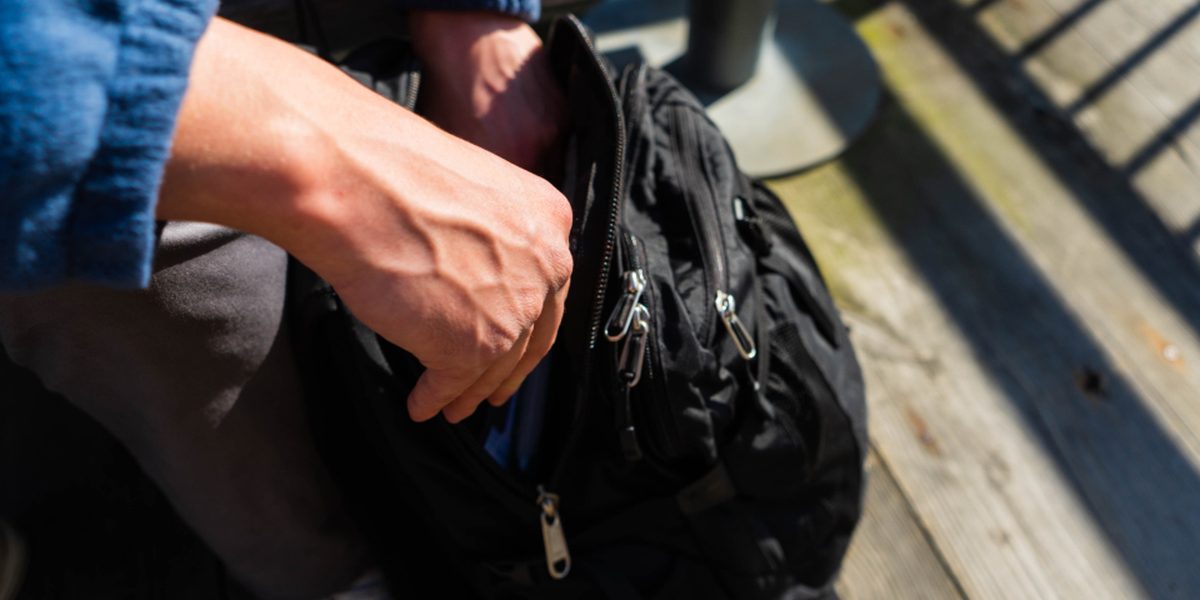
A daily-carry backpack works harder than almost anything else you own. It is loaded past sense, slung onto one shoulder, dropped on concrete, wedged under seats, rained on, and set down on every questionable floor in town — day after day, for years. Some bags absorb this life for a decade and look better for it; others are frayed and broken inside two school years. The difference is visible in advance to anyone who knows where backpacks actually fail. This review follows daily-use packs through their real aging process: the components that go first, the fabric and coating chemistry working in the background, the carrying habits that quietly decide lifespan, and the repairs that keep a good bag out of the landfill.
Zippers: The Moving Part That Decides the Bag
Ask any repair shop what kills backpacks and the answer starts with zippers. A pack's main zipper opens and closes thousands of times a year under tension from overstuffing, and it fails in a known order: first the slider wears internally and stops pressing the coils together — the classic zipper that opens behind itself — then the coils themselves deform or shed teeth, and finally the surrounding fabric tape frays into the mechanism. The crucial ownership knowledge is that the first failure, the worn slider, accounts for most zipper deaths and costs almost nothing to fix: a repair shop or a patient owner with pliers can swap a slider in minutes, resurrecting a bag that looked finished.
Prevention is equally unglamorous. Zippers die fastest on bags packed so full the closure is under load all day; they die slower when kept clean of grit and run occasionally over wax or graphite. And at purchase time, coil size and brand reputation on the zippers are worth more than any fabric marketing on the hang tag — a bag is only as durable as its most-used closure. Water-resistant coated zippers, for all their appeal, wear their coatings at the slider's path and get stiffer with age; standard coil zippers under a storm flap remain the boring long-distance choice.
Straps, Seams, and the Load Path
Everything you put in a backpack travels through a narrow load path: the strap webbing, the stitching that anchors it, and the seam junctions at the bag's top corners. That is exactly where wear concentrates. Shoulder-strap anchor points fray and pull first, especially on bags carried heavy or hoisted daily by one strap; the top haul loop — used to hang the loaded bag on hooks — pulls its stitching next; and side seams around deep-carried loads follow. Padding fatigues too: shoulder straps compress until they cut instead of cushion, and back panels flatten and stop ventilating. Inside the bag, the load path continues: laptop-sleeve stitching takes a corner-first drop every time the bag is set down hard, and pen pockets and key clips tear free years before the compartments around them wear out.
Construction quality reveals itself precisely here. Bar-tacked, reinforced anchor points and bound interior seams survive years of load; single-stitched straps on unbound seams are a countdown. The good news is that this is a sewing problem, not a chemistry problem — a cobbler or gear-repair service can re-stitch anchors and reinforce seams cheaply, and doing so at the first loose threads prevents the dramatic strap-in-hand failure on a commute.
Fabric and Coatings: The Slow Chemistry
Pack fabric ages on two layers. The visible face — woven nylon or polyester — abrades where the bag meets the world: the bottom panel, the corners, and wherever it rubs the wearer or the ground. High-denier weaves take years to wear through; thin fashion fabrics fuzz and split quickly at the same spots. Sunlight adds slow ultraviolet damage that fades color and weakens fibers, which is why the sun-facing side of a bike commuter's pack ages fastest.
The invisible layer matters more than most owners know: the waterproof polyurethane coating inside the fabric hydrolyzes with age and humidity, eventually turning sticky, peeling in sheets, and shedding a distinctive chemical smell. This is the failure behind the flaking interior of a long-stored pack, it is accelerated by damp storage, and it is effectively irreversible. Storage habits — dry, ventilated, out of hot attics and car trunks — are the only defense, and they are the reason two identical bags can age a decade apart.
The Habits That Add Years
Backpack longevity is mostly decided between uses rather than during them.
- Carry less, or carry honestly. Chronic overloading strains every failure point at once; if the bag is always at capacity, the bag is too small.
- Use both straps. One-shoulder carrying doubles the load on a single anchor and ages the bag asymmetrically.
- Lift by the haul loop, hang by the haul loop — it is the one handle engineered for the job.
- Empty it and let it dry after wet days, open and inside out if soaked; trapped moisture feeds coating breakdown and mildew.
- Brush out the grit a few times a year, especially from zipper tracks and the bottom seams where it grinds like sandpaper.
- Store it empty and loose, not crushed under weight in a closet, and never damp.
None of these habits takes a minute, and together they shift a bag's lifespan by years — visibly enough that repair shops can often guess an owner's habits from the wear pattern alone. The single biggest offender they cite is the permanently loaded bag — never emptied, never dried, carrying last month's gym clothes under this month's laptop — which manages to run every aging process in this review simultaneously.
Repair or Replace: A Friendly Ledger
Backpacks sit firmly on the repairable side of the gear world. Slider swaps, strap re-stitching, buckle replacements (most buckles are standard sizes that clip or sew in), patching abrasion holes, and re-binding seams are all inexpensive jobs, and several outdoor brands run lifetime repair programs that handle them free or cheap — a policy worth real money over a decade and a strong tiebreaker at purchase. Replacement wins in three situations: coating hydrolysis, because a sticky, peeling interior cannot be renewed and will shed onto everything carried; widespread fabric wear-through, where patching one hole just promotes the next; and structural frame or back-panel failure on technical packs. A retired daily pack, like most gear in this series, demotes gracefully — gym duty, car kit, loaner — while the repaired good one carries on.
Buying the Next Decade of Carry
Years of daily use rewrite the checklist. Prioritize, in roughly this order: zipper quality and size, bar-tacked strap anchors, fabric denier on the bottom panel, a repair-friendly brand policy, and only then the organizational features that dominate marketing. Choose the size that fits the honest daily load with room to spare, in a fabric and color that hide wear rather than advertise it. The bag that meets that list rarely photographs as excitingly as the trend bag beside it — and will still be working when the trend bag's zipper opens behind itself for the last time.
Final Thoughts
A backpack's aging is legible from day one: the zipper and strap anchors will decide its life, the coating will decide its old age, and the owner's habits will decide the schedule. Buy the closures and stitching rather than the styling, carry with both straps, store it dry and empty, and fix the first loose threads instead of the last. Done consistently, the same unremarkable bag rides along for a decade of daily service — the cheapest possible answer to a question most people re-purchase every couple of years.