Clothing is the product category where the gap between purchase price and real cost is widest, because the meaningful number was never the price tag — it is the price divided by the number of times the garment gets worn. A cheap shirt worn four times is expensive; a costly coat worn four hundred times is a bargain. Cost per wear turns a closet into a ledger, and once you start keeping it, the way fabrics actually age becomes the most important product knowledge you can own. This review follows the major fabric families through years of wearing and washing: what thins, pills, stretches, and fades; the laundering habits that decide lifespan more than any label does; and how the arithmetic should change what you buy.
The Arithmetic That Reorders the Closet
Run cost per wear across an ordinary wardrobe and the results are consistently humbling. The workhorse jeans, the plain sweaters, the everyday jackets — items worn weekly for years — land at pennies per wear regardless of what they cost. The occasion pieces, the trend buys, and the almost-right items that never quite work land at absurd figures no matter how cheap they were. The formula rewards two things only: durability and actual use. A garment that survives two hundred washes but bores you after ten wears fails the math as surely as one you love that dissolves in a season.
This is why long-term clothing ownership begins with an honest forecast, not a durability chart. Before any purchase, the useful question is how many wears the garment will realistically collect — and the follow-up is whether its fabric can survive that number.
The forecast also exposes the false economy at both ends of the market. Paying a premium for durability on a piece that will be worn a dozen times wastes the durability; buying the cheapest version of a daily staple guarantees replacing it repeatedly, at a total cost that quietly passes the quality version somewhere in the second year. The money belongs where the wears are.
Denim and Sturdy Cottons: Aging as a Feature
Denim is the rare fabric whose wear pattern is the appeal. Heavyweight cotton twill fades, softens, and molds to its wearer over years, and its failures are famously repairable: worn knees, frayed hems, and thinning seats respond to patching and darning, and a repaired pair often looks better than a new one. The aging enemies are the washing machine and the dryer more than the pavement — hot washes and tumble drying break down cotton fibers and elastane alike, which is why denim devotees wash cold, rarely, and hang dry. Stretch denim ages differently: the elastane gives out before the cotton, bagging at the knees and seat with no repair possible, trading early comfort for a shorter, less dignified old age.
Plain cotton tees and shirting age by thinning, fading, and losing shape at collars and cuffs. Fabric weight at purchase is the best predictor of their lifespan; gossamer-thin fashion cotton cannot be laundered into longevity by any routine. Seams tell the rest of the story: flat-felled and double-stitched construction survives years of washing that sends single-stitched seams into unraveling retirement, and a ten-second look inside a garment reveals which one you are holding.
Wool and Knits: Durable, but Only on Their Own Terms
Good wool is a decades fabric that punishes mishandling. Its fibers resist odor and wrinkles, recover their shape between wears, and shrug off dirt that would embed in cotton — which is why a wool sweater or jacket needs washing only rarely, and why overwashing is the main way owners destroy it. Felting shrinkage from a hot machine wash is instant and irreversible. The natural aging modes are pilling at friction points (removable with a fabric comb or shaver), thinning at elbows (patchable), and moth damage in storage (preventable with clean storage and cedar or lavender deterrents, since moths seek the food soiled fibers carry).
Knit construction matters as much as fiber: tightly spun yarns pill less and hold shape longer than loose, lofty spins, and fully fashioned knitting outlasts cut-and-sewn knitwear at the seams. A quality knit rested a day between wears, de-pilled occasionally, washed seldom and gently, and stored clean routinely reaches its second decade.
Synthetics and Blends: Cheap Miles, Different Failures
Polyester, nylon, and their blends resist the failures natural fibers suffer — they barely shrink, dry fast, and keep their dye — but they age in their own ways: pilling into stubborn bobbles, developing permanent odor retention in activewear, and losing the crisp drape that made them presentable. Elastane, blended into nearly everything for stretch, is usually the first fiber to die in any garment containing it; heat is its assassin, which makes the dryer the most expensive appliance in a stretch-heavy wardrobe.
Blends are a trade with a hidden clause: a natural-synthetic mix inherits some strengths of each, but the garment's lifespan is set by whichever fiber fails first, and repairs like re-dyeing or reshaping that work on pure naturals often fail on blends. For hard-use, high-wash roles — gym wear, kids' clothes, travel pieces — synthetics win the cost-per-wear race anyway, because their miles are cheap even if their old age is graceless.
Laundering: The Real Durability Decision
How a garment is washed matters more to its lifespan than almost any quality difference on the rack. The mechanics are simple: heat, agitation, and harsh detergent all break fibers, and every cycle spends a little of the garment.
- Wash less. Most outer layers and wool need airing, not washing. Spot-clean before laundering whole garments.
- Wash cold and gentle. Cold water cleans modern detergents fine and roughly halves the fiber damage per cycle.
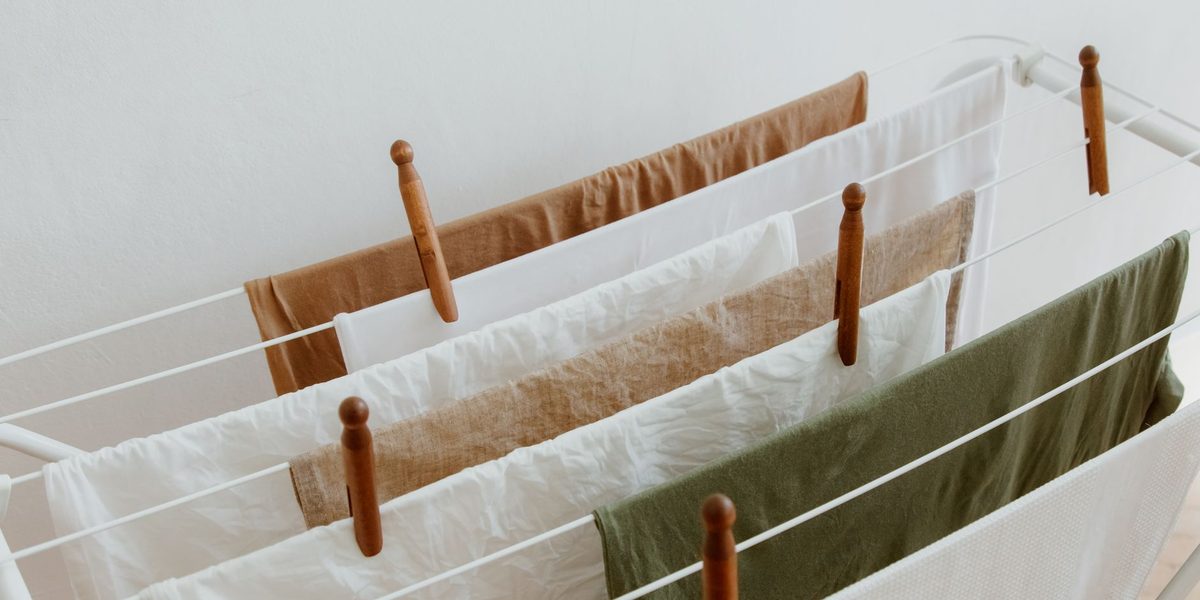
- Skip the dryer where it counts. Air drying is the single biggest lifespan extension available for elastane, wool, and anything fitted.
- Turn garments inside out and close zippers, which moves abrasion to the hidden face and stops hardware chewing neighbors.
- Use mesh bags for knits and delicates, converting the machine's violence into a gentle swirl.
A wardrobe laundered this way commonly lasts half again as long as an identical one run hot and tumbled — a durability difference larger than the gap between most price tiers.
Repair, Alter, and the Second Life
Clothing repair is enjoying a quiet revival for good economic reasons. Buttons, hems, small tears, and seam splits are trivial fixes that owners abandon garments over; a basic sewing kit pays for itself with one rescue. Beyond repair sits alteration — taking in, letting out, re-hemming — which resets the fit that time and bodies drift away from, and fit is usually why a durable garment stops being worn. The cost-per-wear frame makes both obvious: every repair that returns a loved garment to rotation drives its number down further, while every sound garment abandoned in the closet freezes its number where it stands. Retirement, when it comes, is a demotion — house clothes, yard clothes, rags — the textile version of a full life.
Final Thoughts
Fabrics publish their futures as clearly as furniture does: heavy cottons and good wools age slowly and repair willingly, stretch fibers die young wherever heat finds them, and synthetics sell cheap miles with an ungraceful finish. The owner's leverage is enormous — wash cold, dry on air, repair early, and buy for forecast wears rather than aspiration — and the reward is a closet where the honest metric keeps falling year after year. The best-dressed ledger is not the one with the most entries; it is the one where every entry got worn until the math turned to pennies.