Bread has quietly split into two worlds. In one, a supermarket loaf costs little, lasts two weeks, and slices itself. In the other, a burnished sourdough boule costs several times as much, goes stale by Thursday, and inspires the kind of devotion usually reserved for sports teams. Partisans of each treat the other side as either pretentious or hopeless. The honest question is simpler: what are you actually getting for the extra money and effort, and when is the humble bagged loaf genuinely the better choice? Here is the verdict, without the romance and without the snobbery.
What Sourdough Actually Is — and What It Often Isn't
True sourdough is bread leavened by a live culture of wild yeast and bacteria rather than commercial yeast, fermented slowly over many hours. That long fermentation is where everything distinctive comes from: the tang, the chew, the open crumb, the deeply browned crust, and the way the flavor changes from the edge of the slice to its center.
Here is the first honest complication: much of what is sold as “sourdough” is not that. Plenty of supermarket sourdough is ordinary yeasted bread with souring agents added for flavor — real tang, fake process. It looks the part and tastes vaguely right, but it has the keeping quality and texture of the standard loaf it secretly is. A quick tell is the ingredient list: genuine sourdough needs little more than flour, water, and salt, while imitations carry yeast plus acidifiers. If you are paying sourdough prices, it is worth confirming you are getting sourdough fermentation. The loaf itself offers clues too: real sourdough tends to have an irregular, glossy crumb and a crust with deep color variation, while the imitation is uniform inside and evenly tanned outside, like the standard loaf it is. None of this makes the imitation bad bread — it is often perfectly pleasant — but it does make it bad value at artisan pricing.
Flavor and Texture: A Real Difference, Not a Subtle One
Set a slice of well-made sourdough next to standard sandwich bread and the difference is not a connoisseur's illusion — it is obvious to anyone. The sourdough has a crackling crust, a moist and elastic interior, and a layered flavor that is wheaty, tangy, and faintly sweet all at once. Commercial sandwich bread is soft, uniform, mildly sweet, and engineered to be inoffensive, because inoffensiveness at scale is precisely its job.
But — and this is where honesty matters — obvious difference is not the same as universal preference. Plenty of sandwiches are better on soft, square, structurally boring bread. A crusty artisan loaf fights back against a delicate filling, shreds the roof of your mouth on day two, and refuses to fit in a standard toaster slot. The correct conclusion is not that sourdough is better bread, but that it is a different bread, superior for some uses and clumsy for others.
The Digestibility Question, Handled Carefully
Sourdough carries a halo of health claims, and they deserve a careful rather than credulous treatment. The long fermentation genuinely does transform the dough: the culture partially breaks down starches and certain compounds in the flour, and many people simply report that slowly fermented bread sits more comfortably than fast-made bread. That much is reasonable to say.
What is not reasonable is treating sourdough as a health food or a solution to specific dietary conditions. It is still bread — flour, water, salt — and anyone managing a genuine medical condition involving wheat or gluten should be guided by a professional, not by a bakery's chalkboard. The fair summary: sourdough's fermentation is a real process difference that some digestions appreciate, and everything beyond that is marketing leaning on a grain of truth.
Keeping Quality, Price, and the Waste Problem
Commercial bread wins the practicality contest by a mile, and it is worth spelling out why. Softeners and preservatives keep a bagged loaf pleasant for a week or two; real sourdough peaks the day it is baked and declines from there, though its acidity does keep it edible longer than other artisan breads. Pre-sliced uniformity matters for lunchboxes and toast schedules. And the price gap is large enough that for a household going through a loaf every couple of days, the artisan habit becomes a real line item.
The waste angle cuts both ways. Half a fancy boule fossilizing on the counter is money thrown away, and it happens constantly. But sourdough's second life is genuinely better: it makes superior toast, grilled cheese, croutons, panzanella, and French toast precisely because of its sturdy structure. A practical household trick settles most of it — slice the loaf on day one and freeze half. Frozen sourdough toasts back to nearly fresh, which quietly eliminates the biggest argument against buying it. Storage matters for the half you keep out, too: a paper bag preserves the crust but hastens staling, a sealed plastic bag keeps the crumb soft while turning the crust to leather, and the refrigerator is the worst of all worlds, staling bread faster than the counter does. Cut-side down on a board under a cloth is the low-tech compromise that bakers themselves tend to use.
When Each Loaf Actually Wins
Strip away identity and the use cases sort themselves cleanly:
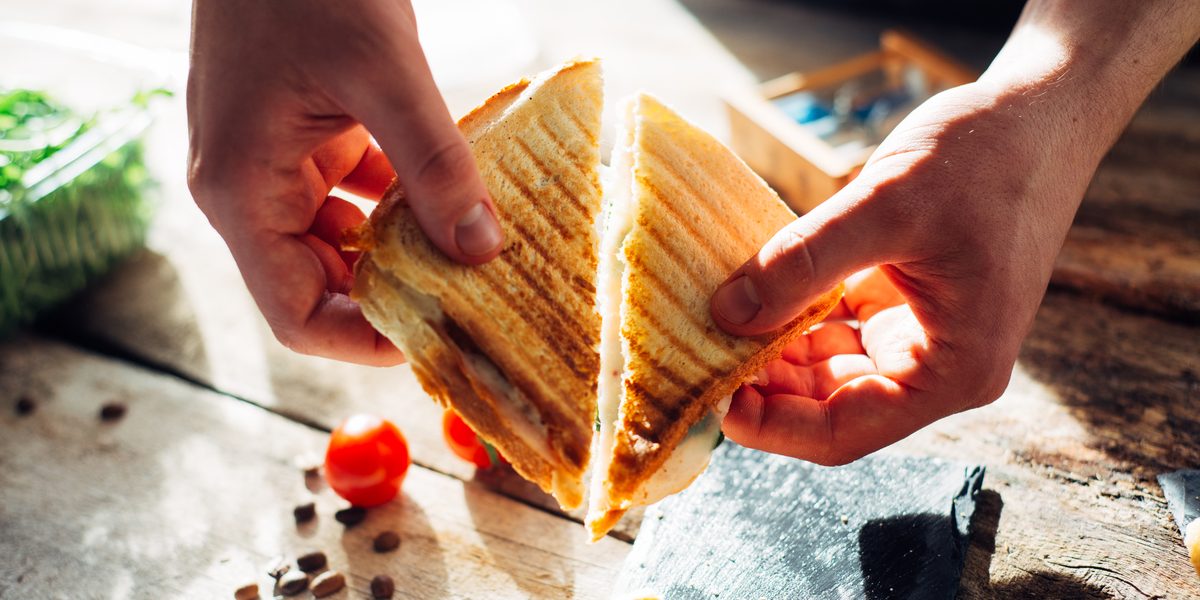
- Sourdough wins: eating bread as its own event — with butter, cheese, soup, or olive oil; toast where texture is the point; grilled and pressed sandwiches; any dish that needs bread with structural integrity.
- Commercial bread wins: kids' lunches and picky eaters; peanut butter and jelly and other soft nostalgic sandwiches; households that need bread to survive two weeks; anyone on a tight budget; stuffing and bread pudding, where softness is a feature.
- Either works: everyday toast with toppings, breadcrumbs, and French toast, where preference and price can decide.
Notice that this is a genuine split decision. The framing of sourdough as the upgrade and sandwich bread as the compromise fails in both directions — each is the wrong tool surprisingly often.
The Home-Baking Wildcard
There is a third option that changes the math entirely: baking sourdough yourself. The ingredients for a loaf cost very little, and a maintained starter is essentially free leavening forever. The honest catch is that the currency is time and attention — feeding a starter, planning fermentation around your schedule, and accepting a learning curve of dense early loaves. For people who enjoy the process, home baking delivers bakery-quality bread at commodity prices and is one of the most satisfying hobbies a kitchen can host. For people who do not, it becomes a guilt-generating jar in the refrigerator. Know which person you are before adopting a starter, because the starter cannot tell. A reasonable middle path is to bake on weekends only and keep the starter dormant in the refrigerator between sessions, which cuts the maintenance burden to a single feeding and fits real schedules far better than the daily-ritual version of the hobby.
Final Thoughts
Is sourdough worth it? As a regular indulgence, judged as the centerpiece of a meal — honestly, yes: the difference from commercial bread is large, real, and immediately tastable, and freezing half the loaf removes most of the waste objection. As a wholesale replacement for every loaf in the house, mostly no: soft commercial bread earns its place through price, longevity, and its unmatched fitness for ordinary sandwiches. The wisest bread drawer holds both — a workhorse and a treat — and the only genuinely bad outcome is paying artisan prices for imitation sourdough, or feeling ashamed of a perfectly sensible bagged loaf that does its unglamorous job well.