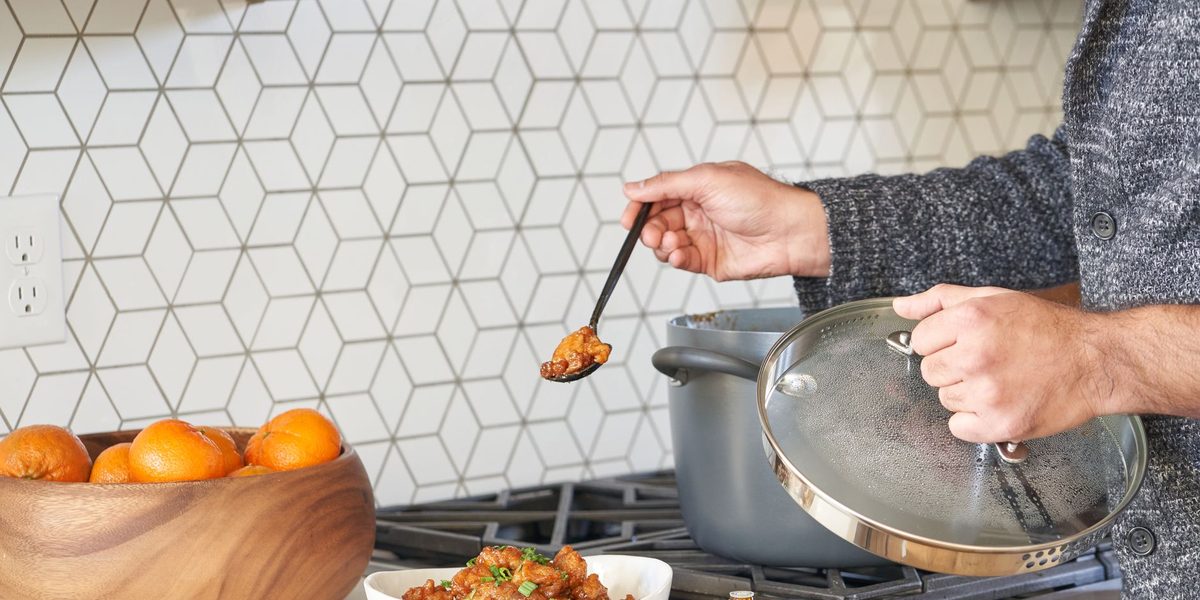
The slow cooker and the electric pressure cooker occupy the same shelf in the store, promise the same outcome — tender, deeply cooked food without standing at the stove — and could hardly be more different in how they get there. One stretches cooking across a workday; the other compresses it into an hour. The marketing for each implies it makes the other obsolete, and neither claim survives contact with an actual kitchen. Having weighed the two formats across the meals they both claim to own, here is the honest verdict on which one deserves your counter, and for whom.
Two Opposite Answers to the Same Problem
Both appliances exist to solve the tough-cut problem: the most flavorful, affordable cuts of meat — and the heartiest beans and stews — need long, moist cooking to become tender. The slow cooker's answer is time: gentle heat over six to ten hours, hands-off from the moment the lid goes on. The pressure cooker's answer is physics: a sealed pot raises the boiling point of water, so food cooks far hotter than normal simmering allows, collapsing those same hours into forty-five minutes or an hour.
The key insight for the whole comparison is that these are scheduling tools as much as cooking tools. The slow cooker moves work to the morning and rewards people who can invest ten minutes before leaving the house. The pressure cooker rescues the evening and rewards people who decide on dinner at five o'clock. Which failure you need rescuing from — morning chaos or evening chaos — predicts your winner better than any cooking argument. It is worth sitting with that question for a moment before reading on, because every subsequent trade-off matters less than this one.
What Each Does to Food: The Honest Differences
Cooked head to head on the same stew, the two produce genuinely different results, and preference splits honest cooks. The slow cooker's long, low bath gives sauces time to reduce slightly and flavors time to settle into each other; its best dishes taste rounded and married, like day-old soup in the best sense. Its characteristic flaw is dilution — nothing evaporates under that lid, so lazy recipes come out watery and pale, and vegetables added at hour one are ghosts by hour eight.
The pressure cooker produces astonishing tenderness in a fraction of the time and extracts deep flavor from bones and beans — stocks and bean pots are where it is untouchable. Its flaws mirror its strength: everything happens blind inside a sealed pot, so there is no tasting and adjusting mid-cook; timing errors compound fast at high heat, with a few extra minutes turning chicken to strings; and sauces emerge thinner and brighter, often needing a reduction simmer after the lid comes off. Neither machine browns meat well on its own — the sauté functions on electric models are underpowered relative to a real pan — so honest cooks using either format still sear on the stove when the dish deserves it.
The Convenience Comparison Marketing Avoids
Both formats claim effortlessness; each hides different effort. The slow cooker's is front-loaded and mild: morning prep, and recipes that honestly need eight hours when your workday runs ten (most models mercifully switch to keep-warm). Its payoff is unmatched: walking into a house that smells like dinner, with zero evening work remaining — a small daily miracle that no other appliance in the kitchen reproduces, and the reason the format survives every wave of newer technology.
The pressure cooker's hidden effort is procedural. The advertised cook time excludes the pot coming up to pressure and the pressure releasing afterward — together often adding twenty to forty minutes — so “thirty-minute” dishes are honestly hour-long dishes. The lid, gasket, and valve are more washing-up than a slow cooker's simple crock, and the gasket famously holds onto curry smells. None of this cancels the speed advantage; it just shrinks it from miraculous to merely large, and buyers who skipped the fine print are the ones whose machines end up in the appliance graveyard cabinet.
Safety, for the record, is a solved problem in both formats. Modern electric pressure cookers are festooned with interlocks and release valves, and the exploding-pot stories belong to a previous generation of stovetop hardware. The slow cooker's only real hazard is the opposite one — food held too long at gentle temperatures if the machine is misused — which the keep-warm cycle and common sense handle.
Where Each Format Wins Outright
- Slow cooker wins: workday stews and chilis; pulled and shredded meats for a crowd; party dips and mulled drinks that need hours of gentle holding; cooks who want dinner finished by breakfast; anyone who prizes set-and-truly-forget simplicity.
- Pressure cooker wins: weeknight beans from dry without soaking; homemade stock in an hour instead of an afternoon; risotto, tough cuts, and whole grains on a same-day decision; small kitchens that value one pot doing several jobs; meal preppers batch-cooking on Sundays.
- Either works: soups, curries, pot roasts, and most braises — pick by schedule, not by dish.
The Multi-Cooker Question
Since most electric pressure cookers now include a slow-cook mode, the obvious question is whether one machine settles the debate. Honestly: partially. The pressure function on these multi-cookers is excellent — it is the core technology. The slow-cook mode is serviceable but often runs at different temperatures than a dedicated slow cooker, and long-time slow-cooker recipes do not always translate faithfully. For a first appliance, especially in a small kitchen, the multi-cooker is the rational buy: you get the whole pressure repertoire and a passable slow cooker in one footprint. Households that already love their slow cooker's results should treat the multi-cooker as an addition, not a replacement — and households that cook for crowds should note that dedicated slow cookers come in generous oval sizes that fit roasts the round pressure pot cannot.
Cost, Space, and the Appliance-Graveyard Test
Neither format is expensive as kitchen equipment goes, and both are cheap relative to what they replace — takeout on tired nights. The real cost is counter and cabinet space, and the honest predictor of value is what might be called the graveyard test: will this machine be used weekly, or will it join the bread maker in the cabinet of good intentions? Slow cookers pass the test in households with predictable routines and a taste for braised comfort food. Pressure cookers pass it in households that cook beans, stock, and grains, or that habitually decide dinner late. Machines bought because of someone else's enthusiasm fail the test in both categories at identical rates. Before buying either, name the three specific dishes you will make in the first month; if the list comes slowly, the cabinet already knows how this ends.
Final Thoughts
The honest verdict: the pressure cooker is the more capable machine, and the slow cooker is the more forgiving one — and capability loses to fit every time. Buy the slow cooker if your life has mornings and your cooking leans toward stews that should taste like Sunday. Buy the pressure cooker — almost certainly as a multi-cooker — if your life has five-o'clock decisions, dried beans, and a stock pot's worth of ambition in an apartment kitchen. Buy neither out of aspiration alone, because both machines only save labor you were actually going to spend. And if you genuinely cook both ways, the two coexist happily: one owns the day you planned, the other owns the day you didn't.