Few kitchen convictions are held as piously as the one about homemade stock. Cookbooks treat the simmering pot as the foundation of all serious cooking, and the carton in the pantry as a confession of defeat. Meanwhile, actual weeknight cooking in actual homes runs overwhelmingly on boxed broth, and most of those dinners turn out fine. Both facts are true, which is exactly why this comparison needs honesty rather than reverence: where does homemade genuinely change the food, where is the carton quietly just as good, and what do the shortcuts in between really deliver?
What Homemade Stock Actually Is
Real stock is bones, water, aromatic vegetables, and time. The long simmer draws collagen out of the bones and connective tissue, and that collagen — converted to gelatin — is the entire point. Gelatin gives stock body: the silky weight on the tongue, the sauce that clings instead of running, the soup that feels nourishing rather than merely wet. A proper homemade stock jiggles when chilled, and no seasoning can fake that texture, because it is structure, not flavor.
Boxed broth is a different product wearing a similar label. It is produced quickly and lightly, contains little or no gelatin, and leans on salt and flavorings to read as savory. The best cartons taste clean and honest; the worst taste like salted vegetable water with a chicken accent, and the price difference between the two is often smaller than the flavor gap deserves. None of them have body — pour a carton into a pan and reduce it by half and you get saltier liquid, not silkier liquid, which is the single most useful thing to understand about the difference.
Where the Difference Is Obvious — and Where It Vanishes
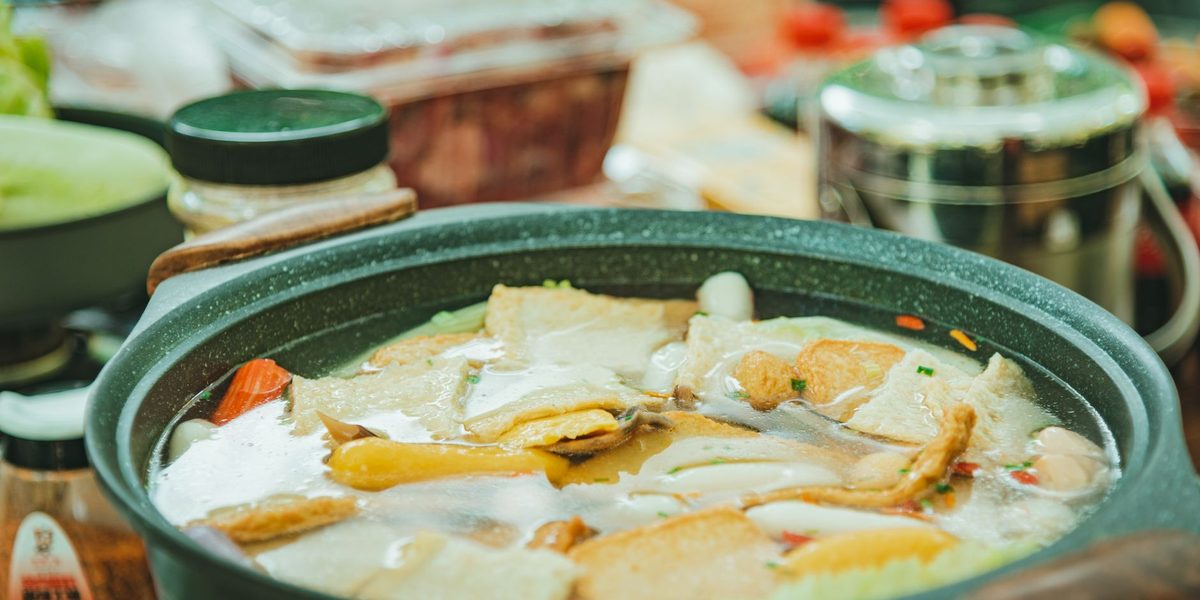
The honest map of when homemade matters follows one rule: the more the liquid is the dish, the more stock quality shows. Brothy soups where you sip the liquid itself — chicken noodle, ramen-style bowls, matzo ball soup, French onion — display the difference embarrassingly clearly. Risotto, where the liquid is absorbed and concentrated into every grain, is nearly as revealing. Pan sauces and gravies built by reduction depend on gelatin for their glossy cling; made with carton broth they need flour or butter to fake the texture.
Now the other half of the map. In dishes crowded with stronger voices — chili, curry, heavily spiced stews, braises with wine and tomatoes, bean pots with smoked meat — the stock is a background singer, and the carton performs the role indistinguishably. Cooking grains, thinning a purée, deglazing for a weeknight sauté: carton territory, all of it. Using homemade stock in a chipotle chili is like laying oak flooring under wall-to-wall carpet — a real upgrade nobody will ever detect, and an hour of simmering spent where a can opener would have served the dish identically.
The Cost and Time Ledger, Honestly Kept
Homemade stock's economics are strange and mostly favorable. Made the traditional way — from a leftover roast carcass, vegetable trimmings saved in a freezer bag, and tap water — its marginal cost approaches zero, since every ingredient was headed for the bin. Made from purpose-bought bones and fresh vegetables, it costs real money and competes less impressively with the carton, which is inexpensive and infinitely available.
Time is the honest obstacle, and it deserves precision: stock takes hours of simmering but only minutes of work — perhaps fifteen, spread across dumping things in a pot, straining, and portioning. The catch is that those hours must happen while you are home, and the yield must be portioned and frozen or it becomes a science experiment in the back of the refrigerator. Households with a weekend rhythm and freezer space can run a nearly free stock supply on autopilot. Households without either should not pretend they will, and the carton exists precisely for them.
Portioning is the make-or-break habit for the homemade route. Stock frozen in one giant block gets used never; stock frozen flat in bags, in cup-sized containers, or as concentrated cubes gets used constantly, because it thaws at the speed a weeknight allows. Reduce a finished stock by half before freezing and it stores in half the space and reconstitutes with water — a professional trick that fits home freezers beautifully.
The Middle Ground the Purists Skip
Between the all-day pot and the carton sit options that deserve more attention than either camp gives them:
- Concentrated paste bases: jars of reduced stock concentrate deliver more depth than most cartons, keep for months in the refrigerator, and let you dose strength to taste. The best ones are the pantry's biggest overachievers.
- Pressure-cooker stock: a sealed pot extracts gelatin from a chicken carcass in about an hour, collapsing homemade stock's only real cost. For multi-cooker owners, this quietly ends the debate.
- Doctored carton broth: simmer boxed broth briefly with aromatics — an onion half, garlic, herbs, a scrap of ginger, the rinds and stems the recipe discarded — and it climbs surprisingly far toward homemade flavor, though never toward homemade body.
- The hybrid pot: a soup built on carton broth plus one collagen-rich addition (a couple of chicken wings, a leftover bone) captures much of the texture argument for almost no effort.
An honest verdict has to admit that the paste base plus an occasional pressure-cooker batch outperforms both purist positions for most households: better than cartons, saner than the eternal stovetop vigil.
Buying the Carton Well
Since boxed broth will remain most kitchens' workhorse, buy it shrewdly. Choose low-sodium always — not for virtue, but for control, because full-salt broth reduced in a sauce turns inedible and cannot be unsalted. Expect the words stock and broth on labels to mean less than they should; the ingredient list and your own tasting are the real guide. Ignore golden-hued packaging promises, and when a soup will truly showcase the liquid, taste your carton warmed and plain first — five seconds that predicts the whole dish. And treat the opened carton like the fresh product it is: it fades and sours in the refrigerator within days, a small dishonesty of the format that catches everyone once.
The Verdict by Cook
For the weeknight cook feeding a family around work: cartons plus a jar of good concentrate, upgraded to the hybrid trick when soup is the star — no guilt attached. For the weekend batch cook with freezer space: homemade from saved scraps, made monthly, spent on the brothy dishes and risottos where it shines, with cartons covering the background roles. For the multi-cooker owner: pressure-cooker stock from every roast chicken, because at one hour the cost-benefit argument is over. And for the cook who simply loves the ritual — the house smelling of simmering bones on a gray afternoon — make stock because it is pleasant, and let the economics be a bonus rather than the justification.
Final Thoughts
The honest verdict is that homemade stock is neither a moral obligation nor a marginal affectation — it is a specific upgrade with a specific address. Where the liquid is the dish, gelatin is the difference, and homemade (or pressure-cooked, or hybrid) genuinely transforms the result. Everywhere else, the carton does the job, and the cook who knows that spends effort only where mouths will notice. Save your bones, buy low-sodium, keep a concentrate jar for depth emergencies, and reserve the all-day pot for the soups that deserve it. The foundation of good cooking was never the stock itself — it was knowing when it matters.