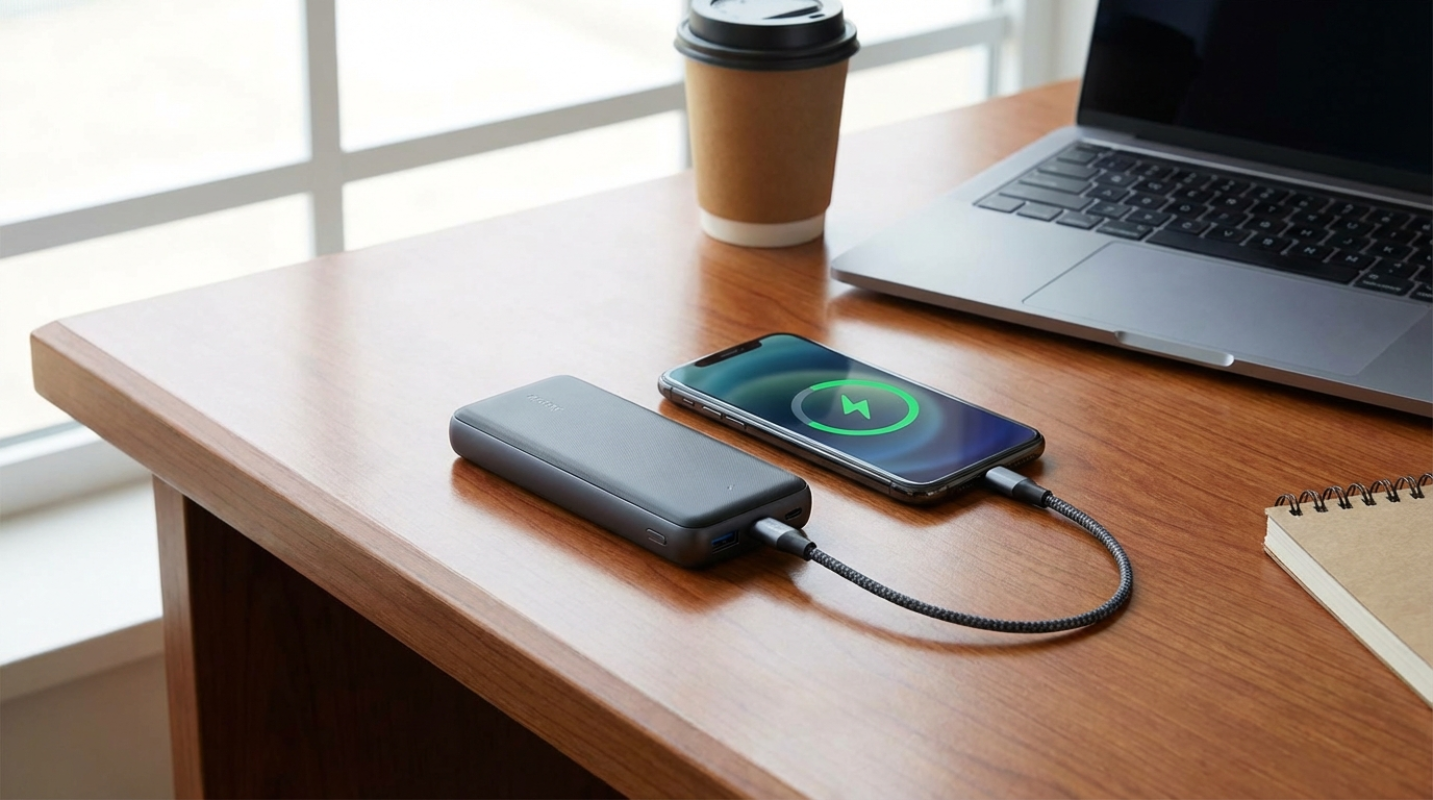
 (Image source: Gemini)
 When it comes to portable power, Anker has spent years holding the fort. Their PowerCore line, specifically the newer Prime series, is what most people picture when they think of high-end backup power. But as we move through 2026, the market is crowded. It isn't just about having a big battery anymore. It's about whether that battery can actually deliver the massive wattage promised without overheating, shutting down, or lying to you about how much juice is left.
This review focuses on the heavy hitters of the lineup, specifically the Anker Prime 27,650mAh (250W) and its smaller 20,000mAh sibling. We're looking at how these units handle the pressure of fast-charging modern gear like the latest MacBook Pros and power-hungry tablets.
Technical Specs
When you look at the side of an Anker Prime brick, you'll see labels like PowerIQ 3.0 and USB-PD 3.1. What does that actually mean for your daily life? , it's the digital handshake between the charger and your device. PD 3.1 is the big one here. It allows the PowerCore to push up to 140W through a single USB-C port. That's enough power to take a 16-inch MacBook Pro from dead to 50 percent in about 28 minutes.
But raw wattage is only half the story. The real engineering happens inside with heat management. Anker uses something they call ActiveShield 2.0. Think of it as a paranoid security guard for your battery cells. It monitors the internal temperature about 3 million times a day. If things get too hot, the charger throttles the output to keep everything from melting. It's a smart system, but it has a side effect: your charging speed might drop if you're using it in a hot environment.
One of the most impressive feats of the Prime series is the input speed. Most large power banks take all night to recharge. The 27,650mAh model supports a 170W input if you use two USB-C ports simultaneously. You can go from an empty brick to a full charge in roughly 40 minutes.¹ That's the digital equivalent of a Formula 1 pit stop. It changes the way you travel because you don't need to leave your gear plugged into a hotel wall for eight hours.
Real-World Reliability Testing - Sustained Performance Metrics
How does this thing actually perform when you're pushing it? We tested the Prime units across a range of devices, including a modern MacBook Pro, a high-end tablet, and smaller accessories like wireless earbuds. The initial burst of speed is undeniable. When you first plug in a hungry laptop, the wattage jumps exactly where it should.
But there's a quirk you need to know about. It's what some users call the 100 percent bug. If you look at the fancy built-in screen, it might tell you the battery is fully charged. But if you hook it up to a professional Power-Z meter, you'll see the cells are often only at about 80 percent capacity.² The device will keep pulling 30W to 35W of power for another 20 minutes after the screen claims it's full. If you're in a hurry and unplug exactly when it hits 100, you're leaving a significant amount of energy on the table.
There's also the issue of energy conversion efficiency. No power bank is 100 percent efficient because physics always demands a tax in the form of heat. On the 20,000mAh model, you're realistically getting about 45 to 50Wh of actual energy delivered to your devices.¹ That's an efficiency rate of about 62 to 70 percent. Although that sounds low, it's actually fairly standard for high-wattage conversions. Just don't expect to get five full phone charges out of a 20,000mAh bank.
Durability and Ecosystem Integration The Long-Term View
Anker builds these things like tanks. They're dense, heavy, and feel like they could survive a fall from a desk without much drama. But even the best hardware has its "ghosts in the machine." Some users have reported an E107 error, which is an undervoltage protection failure. This usually happens after about six months of heavy use, where the ports simply refuse to output power even if the battery is full.
To their credit, Anker has been aggressive with firmware updates. Recent versions like v1.6.2 have fixed a lot of the early Bluetooth connectivity issues and improved compatibility with niche devices like the Starlink Mini. It's a bit weird to think about "updating the firmware" on a battery, but that's the world we live in now.
The ecosystem is where Anker really pulls ahead of the pack. They released a 100W magnetic charging base that is honestly a game-changer. You just set the power bank down on the pins, and it charges. No fumbling with cables, no wearing out the USB-C ports. If you're using this in a professional setting where you're grabbing the battery and going every single day, that base is worth every penny of the $99 price tag.
Top Recommendations
If you're looking for the best way to keep your gear alive in 2026, these are the models that currently lead the pack in reliability and raw speed.
- The Powerhouse: Anker Prime 27,650mAh (250W), This is the one for pro users. It's heavy, but it's the only thing that will reliably charge a high-end laptop at full speed while also topping off your phone.
- The Commuter: Anker Prime 20,000mAh (200W), A bit more manageable in size. It fits in a standard tech pouch and still offers enough wattage to keep a MacBook Air or a large iPad happy all day.
- The Value Play: Ugreen Nexode 25,000mAh, If you don't need the absolute maximum wattage or the fancy magnetic base, Ugreen offers a more consistent battery percentage display for a lower price.³
Final Word on Reliability
Is the Anker PowerCore Prime still the benchmark for reliable fast charging? The answer is a cautious yes. It's the fastest recharger on the market, and the build quality remains top-tier. You're paying a brand tax of about 20 to 30 percent over competitors like Ugreen or Baseus, but in exchange, you get a 24-month warranty and a very sophisticated safety system.¹
You just have to be a smart user. Don't trust the screen when it first hits 100 percent. Give it an extra 20 minutes on the charger if you want a truly full tank. And remember that these high-capacity banks are heavy. At over 1.4 lbs for the 27K model, this is a backpack item, not something you're going to carry in your jacket pocket.
If you're a professional who travels with a MacBook Pro or a gaming laptop, the Anker Prime series is the most reliable choice because of that PD 3.1 support. For everyone else who just needs to keep a phone alive during a long day of sightseeing, you might be better off with Anker’s smaller Nano series or a cheaper alternative. But when the stakes are high and the battery is low, having that 140W single-port output is a luxury that's hard to live without once you've experienced it.
Sources:
1. Redmond Electric Anker Prime 20000mAh Review
2. Reddit Discussion on Prime Battery Accuracy
3. Reddit Comparison of Anker vs Ugreen vs Baseus
The reviews and opinions expressed on this site are for informational and entertainment purposes only. While we strive to provide accurate and up-to-date evaluations of businesses, products, and entertainment, the content should not be considered professional advice, and readers are encouraged to verify all specific details, pricing, and availability directly with the respective providers before making any decisions.



.png)