 (Image source: Gemini)
 We have all been there. You open the cabinet under your kitchen island and get hit with a landslide of gadgets you bought with the best intentions. There is the air fryer you used twice, the bulky slow cooker from your wedding registry, and that weird vegetable spiralizer that is impossible to clean. It is a gadget graveyard. now, the question for any home cook is not just whether a tool works, but whether it earns its keep by replacing three other things.
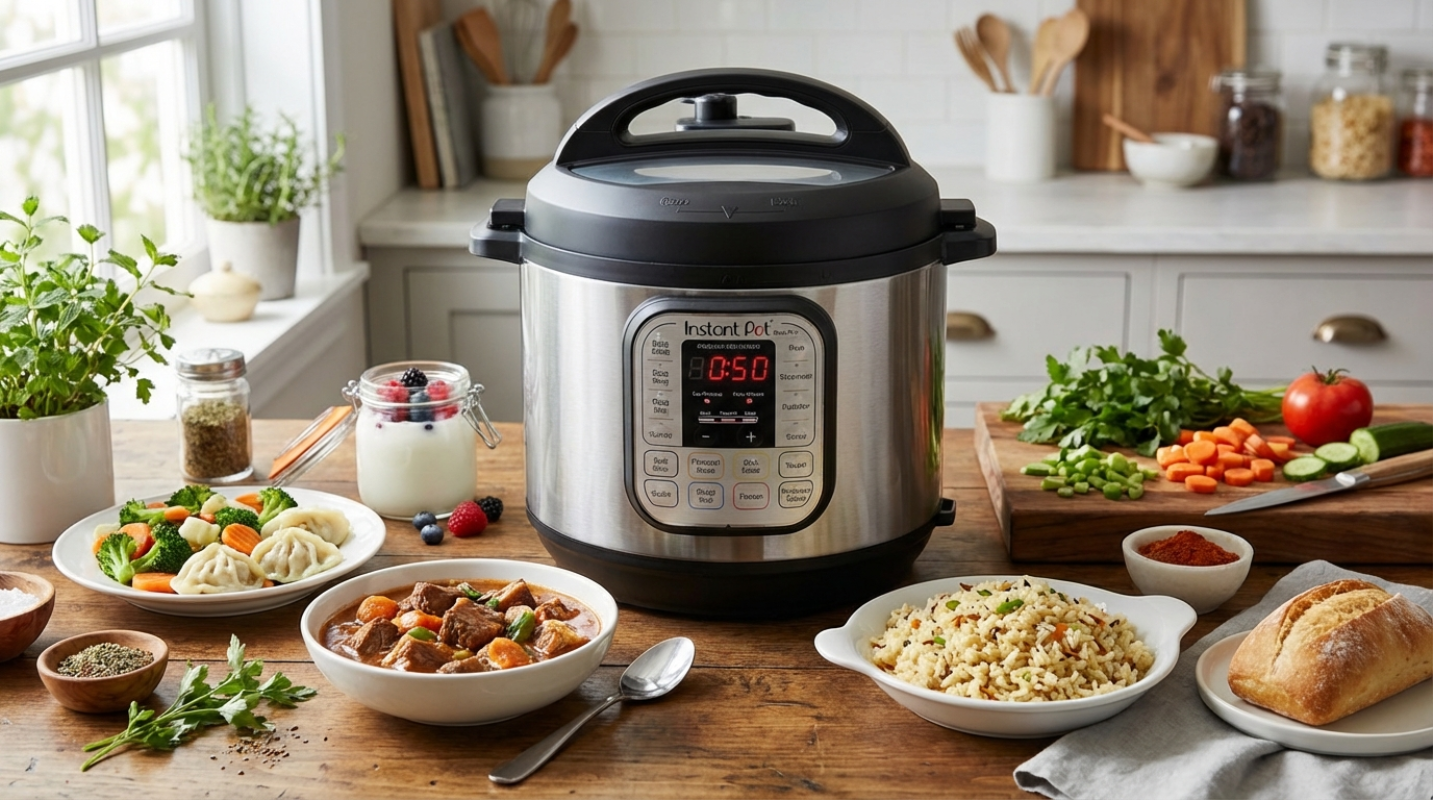
The Instant Pot Duo Plus has been a staple in this conversation for years. It sits right in that sweet spot between the basic entry-level models and the high-end Pro versions that cost as much as a small microwave. But does it actually deliver on that 10-in-1 promise, or is it just a glorified pressure cooker with some fancy buttons you will never press?
In this assessment, we are going to look past the marketing fluff. We will see how this machine handles the chaos of a Tuesday night dinner and whether those extra features like sous vide and sterilization are actually useful. If you are looking to declutter your counters without sacrificing your ability to make a decent pot of chili, you are in the right place.
10-in-1 Functions
When you first pull the Duo Plus out of the box, the sheer number of buttons can be a little intimidating. You have got the heavy hitters like Pressure Cook, Sauté, and Slow Cook. Then you have the more niche options like Yogurt, Rice, and Steamer. The newest iteration focuses heavily on the Whisper-Quiet steam release technology.
If you have ever used an older Instant Pot, you know the "jet engine" sound of the steam release. It is loud enough to wake a napping toddler or scare the cat into the next zip code. The Duo Plus V4 model brings that noise down to about 75dB, which is a massive improvement over the 85dB found on older or cheaper models.¹ It is the digital equivalent of a library whisper compared to a shout.
Let's talk about the "Plus" features. The Sterilize function might seem like overkill until you have a baby in the house or decide to try your hand at home canning. It is surprisingly effective for sanitizing bottles or jars without boiling a massive pot of water on the stove.
Then there is the 30-minute meal test. Take a standard beef chili. In a traditional pot, you are looking at two hours for the flavors to really get to know each other. With the Duo Plus, you can sauté the meat right in the pot, throw in your beans and spices, and have it pressurized and finished in under 40 minutes. The sauté function is particularly good here because the inner pot has an anti-spin design. It locks into place so you aren't chasing the pot around the base while you try to brown your ground beef.
Here are the primary functional modes you will find on the Duo Plus interface:
- Pressure Cooker: The core function used for high-pressure or low-pressure cooking to speed up traditional recipes.
- Slow Cooker: Emulates a traditional crockpot, though it typically requires slightly longer cook times due to the heating element being located only at the bottom.
- Rice/Grain Cooker: Automated programs for white rice, brown rice, quinoa, and other grains.
- Yogurt Maker: A low-temperature mode for pasteurizing milk and incubating bacterial cultures to make homemade yogurt or jook.
- Steamer: Used with the included rack to steam vegetables, fish, or dumplings without under-pressure saturation.
- Sauté Pan: Allows you to brown meat or simmer sauces directly in the inner pot before switching to a pressure or slow cook mode.
- Sterilizer: High-temperature steam mode designed for sanitizing baby bottles, jars for canning, or even certain kitchen utensils.
- Sous Vide: Maintains a steady water temperature (within a few degrees) for vacuum-sealed meats and vegetables, though it lacks a mechanical circulator.
- Food Warmer: A dedicated setting to keep meals at a food-safe serving temperature for up to 10 hours.
- Cake Maker: Recent versions include a specific high-pressure setting tuned for the density of cheesecakes and moist sponges.
The Versatility Test - Comparing Key Modes Head-to-Head
The biggest debate in the Instant Pot community is usually about Pressure Cooking versus Slow Cooking. If you are a die-hard slow cooker fan, the Duo Plus might give you a bit of a learning curve. Because the heating element is only at the bottom, it does not surround the food with heat the way a ceramic Crock-Pot does. In a real-world setting, this means your slow cooker recipes might need an extra hour or two to reach the same level of tenderness.
On the flip side, the Yogurt function has a bit of a cult following for a reason. It is incredibly consistent. You can boil the milk, cool it, and incubate it all in one vessel. If you are tired of paying five dollars for a tiny tub of Greek yogurt, this function alone might pay for the machine in six months.
What about the Sous Vide function? This is where things get a bit technical. A dedicated sous vide wand circulates water to keep the temperature perfectly even. The Instant Pot does not have a circulator. It relies on the heating element at the bottom to keep the water at your target temperature.
Testing shows that the Duo Plus is generally accurate within about 1 to 5 degrees.² But it has a tendency to "overshoot" the temperature right after it beeps. It does this on purpose to compensate for the fact that you are about to drop a cold bag of meat into the water. For a chicken breast or a casual steak, it works beautifully. If you are trying to cook a delicate piece of fish that requires surgical precision, you might still want a dedicated immersion circulator.⁴
Is It Truly User-Friendly?
One of the biggest hurdles for new users is the fear of the "pressure cooker explosion." We have all heard the horror stories from our grandmothers' generation. The Duo Plus goes a long way in fixing this anxiety. The interface is clean, and the large LCD screen actually tells you what is happening. It has a progress bar that shows you when it is preheating, when the cooking cycle is active, and how long it has been in "Keep Warm" mode.
The steam release is also much safer than it used to be. Instead of having to flick a valve with your finger and pray you don't get burned, there is a simple switch or button located away from the steam vent. You just push it, and the machine handles the rest.
Cleaning is another area where the Duo Plus earns some points. The stainless steel inner pot is dishwasher safe, and the lid can be popped in the top rack as well. The sealing ring, which is usually the part that smells like onions for three weeks, is easy to remove and scrub.
Maintaining that confidence post-cooking matters. If a machine is a nightmare to clean, you won't use it. The Duo Plus avoids this by having a relatively simple design without too many hidden nooks for food to get stuck in. Just make sure you wipe down the rim of the base where the lid locks in, as that is the one spot where condensation tends to pool.
The Final Word
So, is the Duo Plus still the MVP? If you are looking for a single appliance that can handle everything from a quick Monday night pasta to a batch of homemade yogurt on Sunday, the answer is a resounding yes. It is the most balanced model in the lineup. You get the upgraded safety features and the quiet release without paying the premium price for the "Pro" models that most people don't really need.
Sure, there are competitors. Some dedicated air fryer/pressure cooker hybrids might edge it out if you really want crispy wings without owning two machines. But for pure versatility in wet cooking methods, the Duo Plus is hard to beat. It is reliable, it is significantly quieter than its predecessors, and it actually does what it says on the box.
If you are a beginner, the interface will hold your hand through the process. If you are a seasoned pro, the ability to customize your pressure levels and cook times on the fly gives you the control you need. It is one of the few gadgets that actually deserves a permanent spot on your counter rather than a life of solitude in the "gadget graveyard" under the sink.⁸
Sources:
This article on OverReviews is for informational and educational purposes only. Readers are encouraged to consult qualified professionals and verify details with official sources before making decisions. This content does not constitute professional advice.



.png)