 (Image source: Gemini)
 You have been waiting for this moment for years. Since the rumors started swirling in 2024, the hype for the successor to the Nintendo Switch has reached a level of intensity almost impossible to satisfy. We have all seen the fan-made renders and the wish lists that look more like a dream for a high-end gaming PC than a portable console. Now that we are looking at the reality of the machine, it's time for a bit of a reality check.
The unpleasant truth is that the Nintendo Switch 2 is not going to be a technical powerhouse that makes your PS5 look obsolete. If you are expecting a device that can push native 4K at 120 frames per second while you are sitting on a bus, you are setting yourself up for a massive letdown. Nintendo has never been interested in winning the hardware arms race. They did not do it with the Wii, and they certainly did not do it with the original Switch.
Success for this new console is not about raw numbers on a spec sheet. It is about the specific way Nintendo approaches gaming. They prioritize the experience and the software over the pixel count. Although that is great for the games, it means we have to accept some compromises that might feel a bit disappointing if you are used to the cutting edge of technology. Let’s break down what you actually need to expect.
The Performance Compromise - Why Next Gen Does Not Mean PS5 Specs
We need to talk about the guts of the machine. The heart of the Switch 2 is the custom NVIDIA Tegra T239 chip³. This is based on the Ampere architecture, which is a significant step up from the ancient Maxwell tech in the original Switch. But this is still a mobile chipset. Think of it like a very efficient, downclocked version of a laptop GPU from a few years ago.
The biggest hurdle for any hybrid console is the trade-off between power and battery life. You can have a handheld that runs like a beast, but it will be heavy, loud, and the battery will die before you finish a single race in Mario Kart. Nintendo is choosing portability every single time. This means the Switch 2 is targeting a performance level that sits somewhere between a PS4 Pro and an Xbox Series S⁴.
So what does this actually mean for you? It means that while the console uses NVIDIA’s Deep Learning Super Sampling (DLSS) to upscale images to 4K when docked, it isn't doing that work natively. It is using AI magic to fill in the gaps. It is a clever trick, but it won't look exactly like a native 4K image on a high-end PC. In handheld mode, you are likely looking at a 1080p screen, which is a nice bump from the 720p we have lived with for nearly a decade, but it won't be a revolution.
Here is a look at the technical breakdown based on the leaks and analysis that have emerged
- Processor: Custom NVIDIA Tegra T239 using the Ampere architecture
- CPU: 8-core ARM Cortex-A78C
- GPU: 1,536 CUDA cores which provides a massive jump over the original hardware³
- RAM: 12GB LPDDR5X which is three times the memory of the first Switch⁵
- Internal Storage: 256GB UFS 3.1 allowing for much faster load times
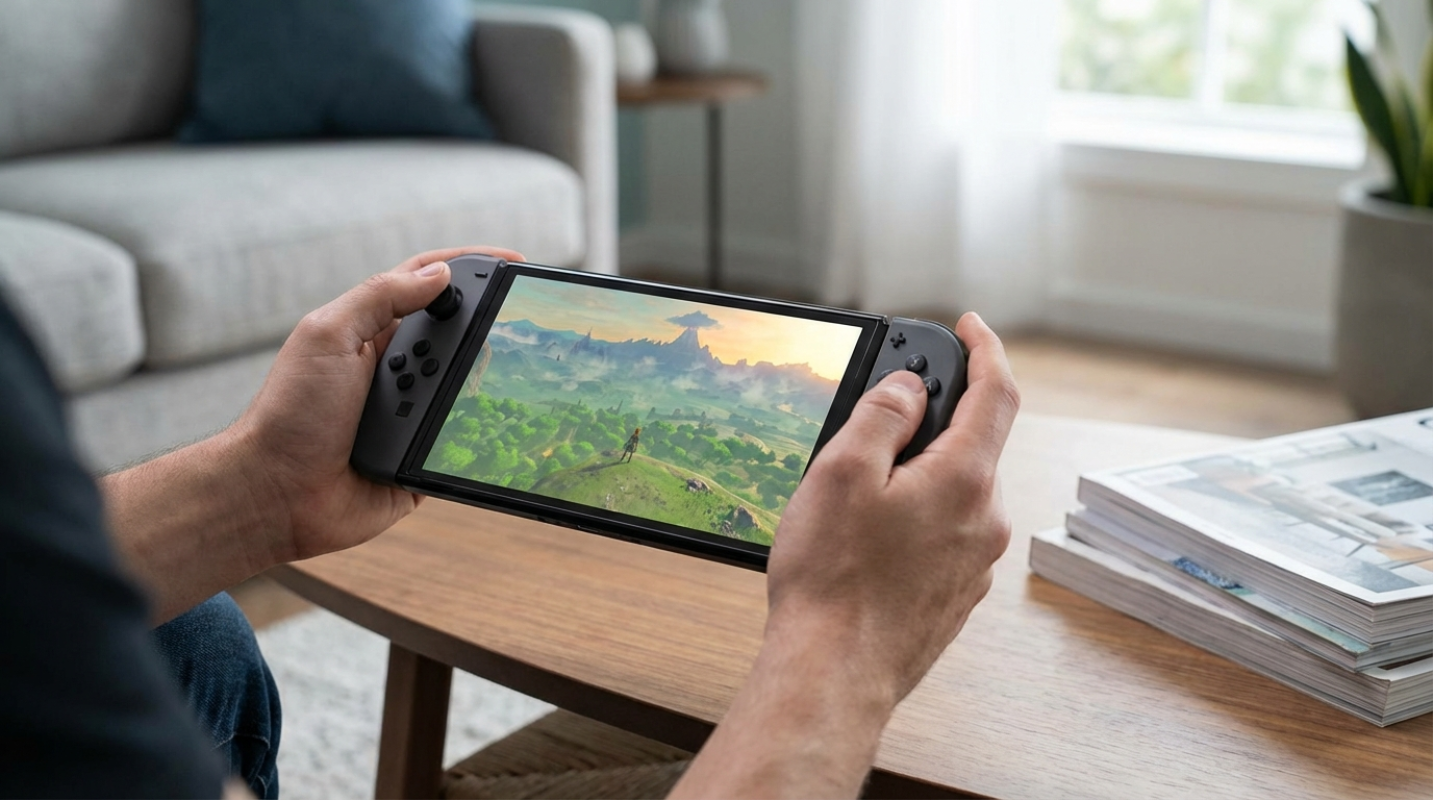
- Display: 8-inch LCD screen at 1080p resolution
Backward Compatibility and Library Approach
The most important feature for many of us is the safety net of our existing libraries. Nintendo finally confirmed that the Switch 2 will be backward compatible, which is a huge relief². You won't have to leave your collection of hundreds of indie games and first-party masterpieces behind. This transition is being handled through the Nintendo Account system, which acts as the bridge between the generations.
But here is the catch. Although your old games will play on the new system, don't expect them all to magically look like brand new releases. There will likely be a "Next-Gen Patch" system where certain titles get a boost in resolution or frame rate. Imagine playing Tears of the Kingdom without the occasional stutter or seeing Metroid Prime 4 in its full glory.
This approach is smart because it keeps you in the ecosystem. But it also means that the launch library might feel a bit familiar. Nintendo is leaning on their existing intellectual property because it knows that is what sells consoles. A new 3D Mario or a polished version of an existing hit matters more to the average gamer than having the most advanced ray tracing in the world.
Affordability vs Innovation
Now we have to address the part that actually hurts: the price. For a long time, Nintendo was the king of the $300 console. That price point was the sweet spot for families and casual gamers. But the world has changed since 2017. The cost of components, especially memory and custom silicon, has skyrocketed.
Analysts have been predicting a $399.99 launch price for the Switch 2. A $100 increase might not seem like much to a hardcore enthusiast, but it is a significant barrier for the casual market. When you add in the fact that flagship games are likely moving to the $70 price point, the total cost of entry becomes much higher than it used to be.
This is the unpleasant truth of the current economy. Nintendo cannot give us 12GB of RAM and a custom NVIDIA chip for the same price they charged for the original Switch hardware. They are trying to balance innovation with affordability, but that balance is getting harder to maintain. If the price goes too high, they risk alienating the very people who made the Switch a global phenomenon.
Embracing the Nintendo Philosophy
At the end of the day, we have to accept the Switch 2 for what it is. It is a refined, more powerful version of the hybrid concept we already love. It won't win a fight against a dedicated home console in terms of TFLOPS or raw processing power. It won't have the most advanced screen technology right out of the gate, as the move back to LCD from OLED is clearly a cost-saving measure.
But does that actually matter if the games are incredible? Nintendo has proven time and again that they can do more with less. They focus on unique gameplay experiences that you simply cannot find anywhere else. If they deliver a new Mario that reinvents the genre or a Zelda that pushes the boundaries of what a handheld can do, the technical compromises will fade into the background.
The Switch 2 will succeed because it understands its own identity. It isn't trying to be a PC in your pocket. It is a Nintendo console, with all the quirks and frustrations that come with it. As long as you go in with your eyes open to these "unpleasant" realities, you will probably find yourself falling in love with it just like you did with the original.
Sources:
1. Nintendo Switch 2 reportedly delayed to the early months of 2025
2. It's Official: Switch 2 Will Be Backwards Compatible
3. Nintendo Switch 2 Specifications and Performance
4. Nintendo Switch 2 Tech Analysis: Is 4K Actually Realistic?
This article on OverReviews is for informational and educational purposes only. Readers are encouraged to consult qualified professionals and verify details with official sources before making decisions. This content does not constitute professional advice.


.png)