 (Image source: Inuvo)
 Looking back from the start of 2026, it's clear that 2025 was the year the "genre" tag finally went to the recycling bin. You probably remember the chaos when the year's biggest stars decided that sticking to one sound was boring. It wasn't just a few indie darlings experimenting in their bedrooms. We saw the biggest names on the planet tearing up the rulebook.
The most successful albums of the past year intentionally defied any single category. This led to a massive wave of commercial and important success that we're still feeling today. Think about it. When was the last time you saw a K-pop group blending heavy metal with hyperpop while a country-turned-pop icon released a 1920s cabaret record?
We're going to look at the records that defined this shift. We'll talk about how "Glitch-Soul" became a thing and why we're all suddenly obsessed with industrial textures in our dance music. If you felt like your playlists got a lot weirder and a lot better in 2025, you aren't alone.
Hyperpop Meets Neo-Soul The Glitch-Soul Movement
The most significant important trend of 2025 was the marriage of "glitchy" digital production with "soulful" vocal delivery. Critics and fans started calling it "Glitch-Soul" or "Post-R&B." It's the digital equivalent of taking a vintage soul record and running it through a paper shredder, then taping it back together with neon glowing tape.
Take Nourished by Time and the album The Passionate Ones. This record is a masterpiece of what some call late-stage capitalism. It bridges the gap between Luther Vandross-style vocals and scuzzy, distorted beats. It's lo-fi, it's 90s R&B, and it's electro-funk all at once. You've got these incredibly warm, human vocals fighting for space against cold, mechanical production.
So what does this actually mean for your ears? It means the music feels more honest. It mirrors the anxiety of our modern age where we're all trying to be human in a world of algorithms. Another artist, Zaiya X, hit it big on TikTok with Fractured Frequency. People described it as hypnotic neon love stories. It uses ASMR-style R&B over beats that feel like they were written by a computer having a fever dream.
Even established stars jumped on this. Kesha's 2025 impact was felt through the "vulnerable soul" at the center of her maximalist hyperpop production. It wasn't just noise for the sake of noise anymore. It was noise used to express real, raw emotion. This "Hyperpop 2.0" evolution moved from niche internet subcultures straight to the top of the global charts.
Industrial Rock Textures in Dance-Pop Structures
If Glitch-Soul was the "warm" side of 2025, the rise of industrial rock textures in pop was the "cold" and abrasive side. We saw artists taking huge risks by integrating darker, heavier elements into songs meant for the club. The best example of this is FKA Twigs and her landmark release, Eusexua.¹
Released in January 2025, Eusexua is a total shift from her earlier chamber-pop sound. It's high-energy club territory that fuses techno, UK garage, and avant-pop. It won the Grammy for Best Dance/Electronic Album and reached the Top 10 in both the UK and US.¹ It's been called "cerebral sexy pop," which is a perfect way to describe it. You can dance to it, but it also makes you feel like you're in a futuristic, slightly terrifying film.
Then you have Stray Kids with KARMA. This was the second best-selling album of the year globally, trailing only Taylor Swift. They successfully blended K-pop, heavy metal, and hyperpop. Have you ever heard a stadium-sized pop hook followed by a breakdown that sounds like a industrial factory? That's KARMA. It solidified the "genre-less" trend on a global scale.
Why did this risk pay off? Probably because we're all a little bored of "safe" pop. We want music that reflects the digital alienation we feel. These albums use abrasive textures to comment on how it feels to live online. They maintain pop accessibility with huge choruses, but the "skin" of the music is rough and industrial. It's a sonic juxtaposition that feels exactly like 2025.
The Important Consensus Why We Embrace Complexity Now
You might wonder why listeners suddenly have such a high tolerance for complex sonic palettes. Back in the early 2020s, genre definitions were much more rigid. You were either a "Pop fan" or a "Rock fan." But today, the "genre" label is basically dead.
Experts from companies like Native Instruments argue that music is now defined by "moment and aesthetic" rather than genre. You probably don't search for "Pop" anymore. You search for "moods." Maybe you want an "espresso-drinking persona" or a "digital fairy" vibe. Streaming algorithms and playlist culture have normalized this fluidity. We're used to hearing a folk song followed by a techno track, so why shouldn't one album contain both?
Critics have been most favorable toward albums that use these "cold" digital tools to express "warm" human emotions. The Guardian and Pitchfork both highlighted how chaotic production can mirror the "anxiety of the modern age." Even the use of AI has become a standard tool. Artists like FKA Twigs and Danny Brown used neural networks to create "warped vocal avatars." It's not about replacing the human. It's about using technology to stretch what a human voice can do.
There's also the "Glocalization" factor. Non-English genres like Bollywood and Amapiano are being fused with Western pop at rates we've never seen before. Forbes reported that Bollywood influences in the top 1000 artists went up 13 times. This has created a "global currency" of sound where regional boundaries are invisible. You're just as likely to hear a Mumbai-inspired beat on a Taylor Swift track as you are on a local indie record.
Top Recommendations
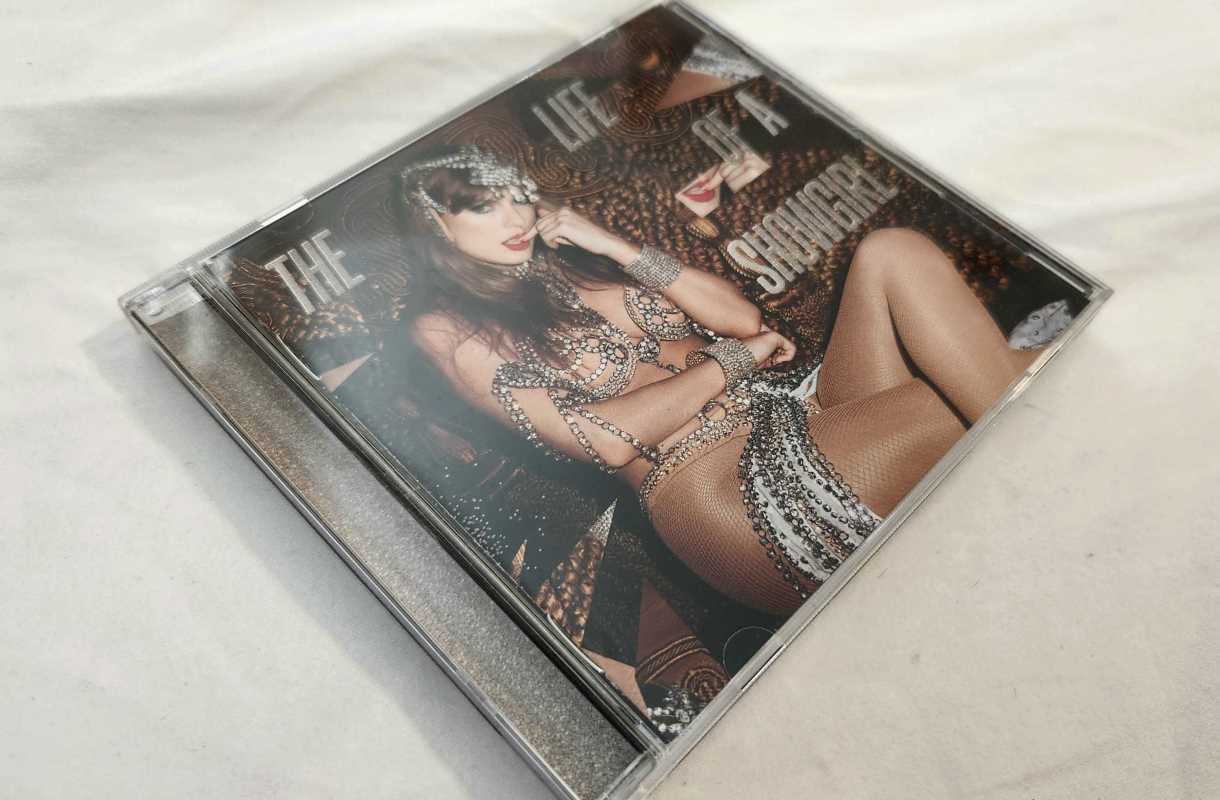
- Taylor Swift - The Life of a Showgirl. The undisputed heavyweight champion of 2025. It's a visual audio drama that blends cinematic pop with 1920s cabaret. It sold 642,000 units in the UK alone.
- Miley Cyrus - Something Beautiful. A genre-fluid visual album inspired by Pink Floyd. It's a mix of psychedelic rock, folk, and cinematic pop that shows her most ambitious vocals yet.
- FKA Twigs - Eusexua. The gold standard for "cerebral sexy pop." It's a masterclass in how to bring techno and avant-pop into the mainstream.¹
- Stray Kids - KARMA. If you want to hear the future of global pop, this is it. It's a wild ride through K-pop, metal, and hyperpop.
- Nourished by Time - The Passionate Ones. The best example of the "Glitch-Soul" movement. It's soulful, distorted, and incredibly catchy.
The New Pop Blueprint for 2026
As we settle into 2026, the impact of these genre-blenders is everywhere. The "safe" pop song is becoming a rarity. Instead, the new blueprint is all about surprise. If a song doesn't have at least three different genre influences, does it even count as pop anymore?
If I had to pick the most influential album of 2025, it would have to be Eusexua. It proved that you can be "difficult" and "experimental" while still winning Grammys and charting in the Top 10. It gave other artists the permission to stop worrying about radio formats and start worrying about vibes.
Looking forward, I predict the next wave will involve even more "Glocalization." We're already seeing the foundation from 2025 being used to build even stranger combinations. Maybe we'll see a rise in "Amapiano-Grunge" or "Folk-Techno." Whatever happens, the walls are down. You don't have to pick a lane anymore. In fact, in the current music space, the fastest way to the top is to drive in all of them at once.
Content on OverReviews is for informational and educational purposes only. Readers are encouraged to consult qualified professionals and verify details with official sources before making decisions. This content does not constitute professional advice.