 (Image source: Gemini)
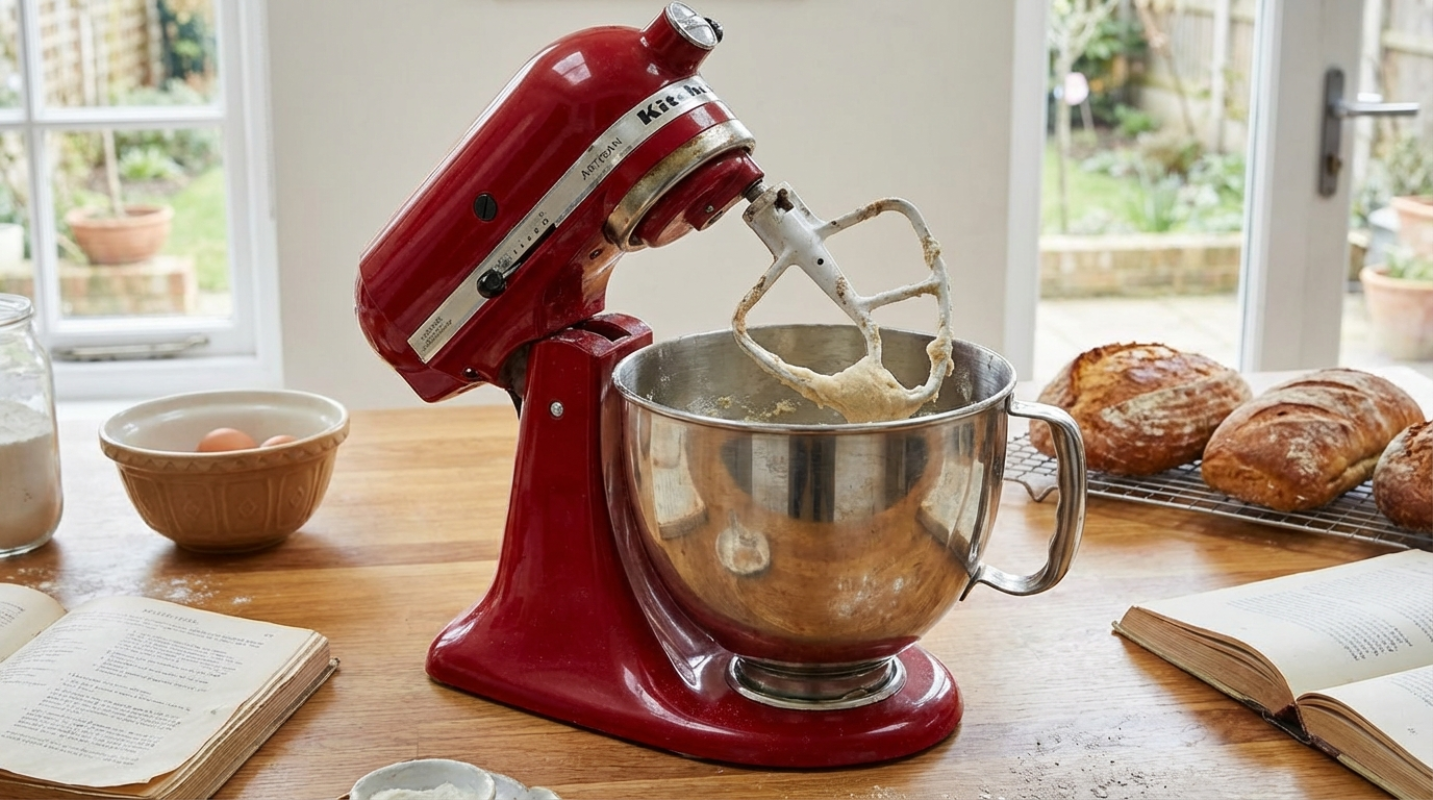
 You know the look. That heavy, glossy silhouette sitting on your neighbor's counter, looking like it belongs in a 1950s diner. For many of us, the KitchenAid Artisan isn't just an appliance. It's a rite of passage. You likely added it to your wedding registry or saved up for months to finally bring that heavy box home. But after the honeymoon phase ends and you've baked a hundred batches of chocolate chip cookies, does it actually hold up?
I've had my Artisan for over six years now. It has survived three moves, one disastrous attempt at triple-batching sourdough, and more holiday cookie marathons than I care to count. In a world where most kitchen gadgets are destined for a landfill after thirty-six months, this mixer is a bit of an anomaly. It's now 2026, and while the market is flooded with high-tech competitors, the old-school tilt-head is still the one people ask about. Is it still a smart buy, or are you just paying for a pretty paint job?
Durability
Let's talk about the elephant in the room. You might have heard people grumbling that "they don't make them like they used to." Specifically, there's a rumor that modern KitchenAids are full of cheap plastic. Let's kill that myth right now. Your Artisan uses a 325-watt AC motor and a series of high-strength metal gears. There is exactly one nylon gear in there, and you should actually be happy it exists.
Think of that nylon gear like a fuse in your electrical panel. It's a sacrificial part. If you accidentally drop a heavy metal spoon into the bowl while the mixer is running, or if you try to knead a dough that's way too stiff, that gear is designed to strip. It breaks, so your expensive motor doesn't have to. Replacing that gear costs about twenty bucks and a little bit of grease. Replacing the whole motor? That's a different story.
After six years, my motor still sounds as smooth as the day I unboxed it. I've noticed the exterior finish is surprisingly resilient, too. Even with flour dust acting like sandpaper and the occasional splash of vanilla extract, the enamel hasn't chipped. The only real sign of age is a tiny bit of "beauty oil" that sometimes leaks from the planetary hub if I haven't used it in a month. This is just the food-grade grease separating. It's a sign that it's time for a quick regreasing, which is a standard maintenance task every five to ten years.
Consistency
Does it still mix as well as it did on day one? For the most part, yes. The planetary action, where the beater moves in one direction while the shaft rotates in the other, is still the gold standard for home use. When I'm creaming butter and sugar for a sponge cake, the aeration is perfect. It's that specific fluffy texture that you just can't get with a hand mixer without a lot of arm fatigue.
The wire whip still turns egg whites into stiff, glossy peaks in minutes. But I have noticed that the "bowl-to-beater clearance" needs a tiny adjustment every year or two. Have you ever noticed a layer of unmixed flour at the very bottom of your bowl? That's usually because the head of the mixer is sitting a fraction of a millimeter too high. There's a single screw in the neck of the machine that adjusts this. It's a thirty-second fix, but it's something you have to stay on top of if you want perfect results.
One thing that hasn't changed is the struggle with heavy doughs. If you're a bread fanatic making bagels or dense whole-wheat loaves every weekend, the Artisan will eventually show its limits. It starts to get warm to the touch, and the head might bounce a bit. It's a machine built for "sweet bakes" and standard bread. If you push it past its weight class too often, you'll be replacing those carbon brushes in the motor sooner than you'd like.
Accessories
The best thing about owning a KitchenAid is the power hub on the front. It's like the universal port of the kitchen world. I bought a pasta roller attachment four years after I got the mixer, and it fit perfectly. KitchenAid hasn't changed this design in decades, which is a rare win for consumers. You don't have to worry about "planned obsolescence" here.
But we need to talk about the attachments themselves. There was a lot of noise on social media recently about lead being found in the metal beaters. Here's the reality: there is no recall.¹ The standard white-coated beaters are made of an aluminum alloy that is sealed with a food-safe coating. The problem isn't lead poisoning; it's chipping.²
After a few years of being tossed in the dishwasher, that white coating starts to flake off at the edges. Once it chips, the aluminum underneath is exposed. If you're buying a mixer today, my advice is to skip the coated stuff. Spend the extra money on the burnished stainless steel attachments. They're dishwasher safe, they won't chip, and they'll probably outlive the mixer itself.
Standard Included Accessories
- 5 Quart Stainless Steel Bowl: Features a comfortable handle and is large enough to mix up to 9 dozen cookies in a single batch.
- Coated Flat Beater: The go-to tool for normal to heavy mixtures like cakes, frostings, and mashed potatoes.
- Coated Dough Hook: Designed for mixing and kneading yeast doughs for bread, pizza, and rolls.
- 6-Wire Whip: Ideal for incorporating air into mixtures like egg whites, heavy cream, and boiled frostings.
- Pouring Shield: Fits onto the bowl to help you add ingredients without making a mess and prevents flour from puffing out.
The Final Verdict
So, is it still worth the splurge? If you're looking for a tool that is repairable, versatile, and consistently reliable for standard baking, the answer is a firm yes. It's one of the few appliances left that isn't designed to be thrown away. You can find parts for this machine at almost any appliance repair shop, or even on eBay, which gives it a massive advantage over the cheaper "all-in-one" digital mixers that are currently trending.
- Pros: Incredible longevity, easy to find replacement parts, a massive collection of attachments, and it looks great on the counter.
- Cons: It's heavy, it struggles with very stiff bread doughs, and the coated attachments tend to chip over time.
If you're a casual baker who makes cookies, cakes, and the occasional loaf of white bread, the Artisan is your best friend. It's an investment that pays for itself over a decade of use. But if you're running a micro-bakery out of your kitchen and you're kneading five pounds of dough at a time, you might want to look at the Professional series. The Pro models use a bowl-lift design and a more powerful motor that handles the heavy lifting without the "head bounce" of the Artisan.
At the end of the day, the KitchenAid Artisan remains the benchmark because it doesn't try to be a computer. It's a motor, some gears, and a bowl. Sometimes, the simplest designs are the ones that actually last.
Sources:
1. Snopes: KitchenAid Recall Lead Fact Check
2. Tamara Rubin: KitchenAid Update Regarding Lead-Contaminated Cast Aluminum
The reviews and opinions expressed on this site are for informational and entertainment purposes only. While we strive to provide accurate and up-to-date evaluations of businesses, products, and entertainment, the content should not be considered professional advice. Readers are encouraged to verify specific details before making any decisions.



.png)