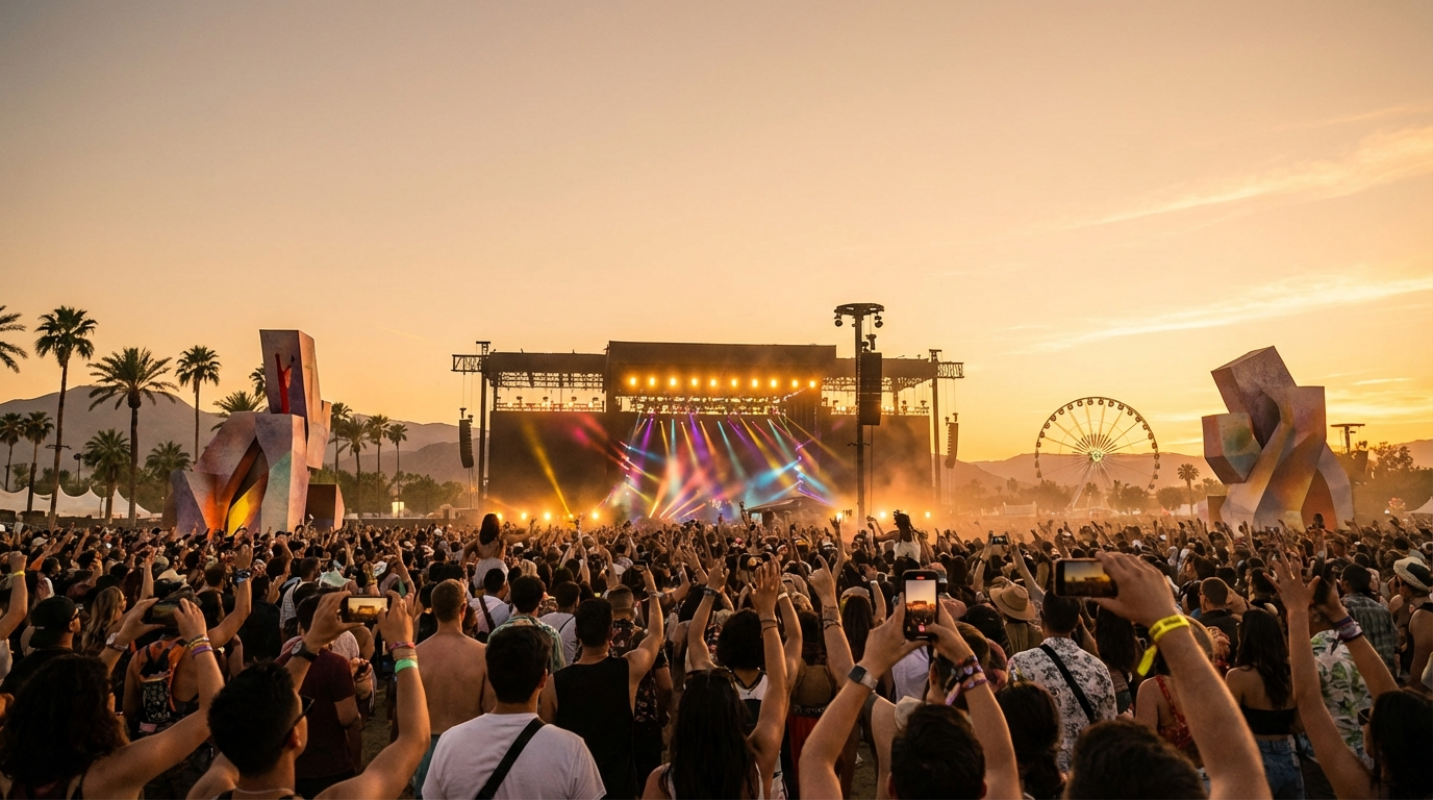
 (Image source: Gemini)
 If you were paying attention to the music industry chatter back in 2024, you probably heard the doom and gloom. People were saying Coachella had lost its crown because ticket sales were sluggish and the "magic" was fading. Well, fast forward to April 2025, and the Empire Polo Club proved the skeptics wrong. It wasn't just a festival. It was a massive, high-stakes comeback that felt like the organizers were fighting for the very soul of the desert.
So, did it actually work? If you were one of the 125,000 people standing in the dust during Weekend 1, the answer felt like a resounding yes, though it came with some serious caveats. The 2025 edition was a wild mix of "old school" stadium rock, high-concept pop theater, and some of the most expensive technical glitches you will ever see. This review looks at whether the massive 24% jump in headliner streaming power actually translated to a better experience on the ground.¹
We are going to look at the balance of the lineup, those insane new stage setups, and the reality of surviving 103-degree heat. Whether you were there in the VIP pits or watching the 12K livestream from your couch, 2025 was a year that redefined what a "mega-festival" looks like in a post-streaming world.
Headliners, Surprises, and Genre Balance
Let's talk about the heavy hitters first. Lady Gaga didn't just show up to sing her hits. She built a literal opera house in the middle of the desert. It was easily the performance of the year. She treated her Friday night slot like a high-art theatrical production, debuting tracks from her new album Mayhem. When she brought out Gesaffelstein for "Killah," the energy was industrial and dark. It was a far cry from the bubblegum pop of her early days. She reimagined classics like "Poker Face" with a gritty edge that felt perfect for a 2025 audience.
Then you had Green Day making their Coachella debut on Saturday. Was it nostalgic? Absolutely. Was it a bit messy? Critics thought so.² Although hearing "American Idiot" and "Dookie" tracks blasted across the Polo Club was a core memory for the older Gen X and Millennial crowd, the flow of the set felt a little muddled at times. They didn't hold back on the politics either, updating their lyrics to reflect the global conflicts of 2025. It was loud, it was angry, and it was exactly what you expect from Billie Joe Armstrong and company.
Sunday was where things got divisive. Post Malone went full country. If you love his new direction, you probably enjoyed the guest appearances from Ed Sheeran and Jelly Roll during Weekend 2. But for the fans who wanted the "Rockstar" and "Congratulations" era energy, the set felt a bit sleepy for a festival closer. Then there was Travis Scott. He had a reported $12 million budget for his "fourth headliner" slot, but money can't buy a smooth show. Between an out-of-tune marching band and Travis literally firing a DJ on stage during Weekend 2, the "hollow" energy led to some pretty thin crowds by the end of the night.³
Beyond the headliners, the genre balance was surprisingly solid. The mid-tier acts focused heavily on a mix of global pop and indie-sleaze revival. It felt like Coachella finally stopped trying to be a TikTok hit factory and went back to being a place where you could actually discover a band that knows how to play their own instruments.
Technological Leaps and Immersive Art
If you are a tech nerd, Coachella 2025 was basically your version of heaven. The main stage was upgraded to a 12K digital display system that was so sharp it almost looked 3D. They used ARRI ALEXA 35 Live cameras for the broadcast, which gave the whole thing a cinematic look. It didn't feel like you were watching a concert screen. It felt like you were inside a high-budget movie.
The Sahara Tent, which is usually just a place to lose your hearing to bass, got a massive upgrade too. They introduced a 360-degree soundscape powered by Dolby Atmos. Think of it like this: instead of the music just hitting you from the front, the sound actually moved around you. When the electronic acts played, you could hear the synths swirling behind your head and the bass vibrating from the floor up. It was easily the most immersive audio experience the festival has ever produced.
The Do LaB also moved to a new spot between the Sahara and Quasar stages. They brought in some heavy-duty Meyer Sound gear, specifically the PANTHER arrays, to keep the audio crisp even in the open air. But it wasn't just about the music. The "Desert Archive Dome" was a huge hit. It used hologram technology and projection mapping to let fans "relive" famous moments from past Coachellas. It was a nice nod to the festival's history while using the tech of the future.
Even the official app got an upgrade. You could use augmented reality (AR) to scan certain art installations and see behind-the-scenes interviews with the artists. It was a cool way to make the physical art feel more interactive, though most people were too busy trying to find shade to spend much time staring at their phones.
Logistics and Vibe Check Beyond the Music
Now, let's get real about the actual experience of being there. It was hot. Weekend 1 saw temperatures hit 103°F, which is about 20 degrees higher than what you usually expect for April.¹ The medical tents were packed with people suffering from heat exhaustion. If you didn't have a hydration pack, you were basically asking for a bad time.
Logistics were a bit of a mixed bag. Although the food and beverage lines moved relatively quickly, the campgrounds were a nightmare. Some people reported waiting 12 hours just to get their cars into the site on Thursday. That's a long time to sit in the desert heat before the music even starts.
The crowd itself felt different this year. Data shows that while 73% of the audience is still in that 18-34 age range, there was a big jump in "family segments."⁸ You saw more parents bringing their Gen Z kids, which changed the vibe a bit. It felt less like a non-stop rave and more like a massive cultural convention.
The most interesting thing was how people paid for it. A staggering 62% of attendees used payment plans to afford their tickets.⁸ With GA tickets starting around $549 and VIP hitting over $1,000, Coachella is becoming a major financial commitment. People were skipping the expensive hotels and resorts to camp on-site just to save a few bucks, which gave the campgrounds a more authentic, gritty feel than the "influencer" vibe of the mid-2010s.
Top Recommendations
If you are planning for the 2026 season or just want to capture that desert energy at home, here are a few things that defined the 2025 experience.
- The Sahara Experience: If you ever have the chance to see a set in a 360-degree Dolby Atmos environment, do it. It ruins regular concerts for you forever.
- Hydration Approach: With record highs becoming the norm, a high-capacity hydration pack is no longer optional. It is a survival tool.
- The Desert Archive: Take the time to visit the hologram installations. It is a great way to cool down and see how much the festival has changed since the 90s.
The Final Verdict
So, what is the definitive verdict on Coachella 2025? It was a festival of extremes. On one hand, you had the absolute peak of live performance with Lady Gaga and the incredible technological innovations in the Sahara Tent. On the other hand, you had the "hollow" spectacle of Travis Scott and the brutal reality of 103-degree weather.
The strongest component was definitely the technical production. Coachella is no longer just a music festival. It is a testing ground for the future of live entertainment technology. The weakest part? The price of entry and the logistical bottlenecks in the campgrounds. When 62% of your audience has to use a payment plan to see a show, you are pushing the limits of what a "fan experience" can actually be.
I would give Coachella 2025 an 8 out of 10. It successfully pivoted away from the "influencer era" and back toward being a serious music and tech event. It proved that legacy acts like Green Day can still command a crowd, while pop stars like Gaga can still push the boundaries of what a headlining set looks like.
As we look toward 2026, the message is clear. The festival isn't dying, but it is changing. It is becoming more expensive, more technical, and more focused on "cinematic" moments. If you can handle the heat and the hit to your bank account, it remains the gold standard for the global festival circuit.
Sources:
1. The Guardian - Coachella 2025 Lineup and Temperature Reports
2. The Needle Drop - The Best and Worst of Coachella 2025
The reviews and opinions expressed on this site are for informational and entertainment purposes only. While we strive to provide accurate and up-to-date evaluations of businesses, products, and entertainment, the content should not be considered professional advice, and readers are encouraged to verify all specific details, pricing, and availability directly with the respective providers before making any decisions.