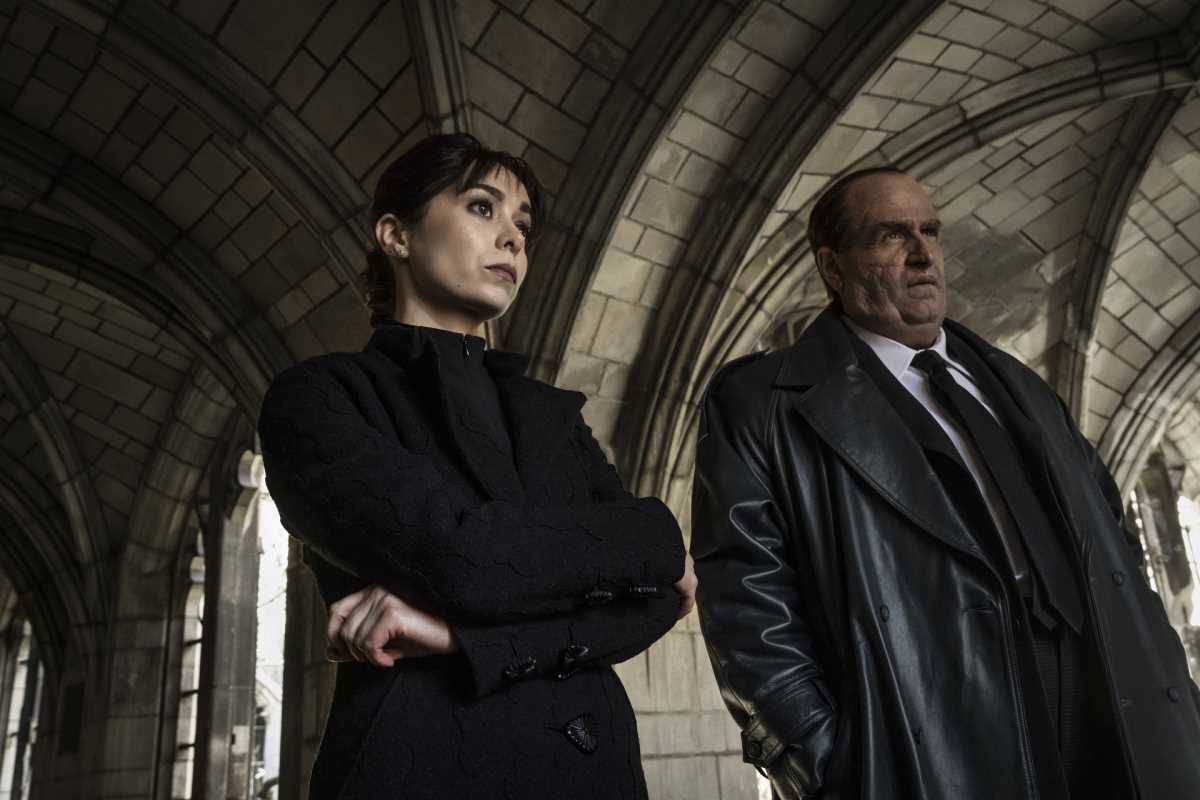
 (Image via
You remember that feeling at the end of Matt Reeves' The Batman when the seawall broke and Gotham turned into a literal bathtub? Most of us were wondering how the city could possibly recover, but for Oswald Cobblepot, that flood was the best thing that ever happened to his career. Now that it's over, let's look back at the series that bridged the gap between the first film and the upcoming sequel. The Penguin wasn't just a placeholder. It was a hostile takeover of the prestige TV space.
If you went into this expecting a standard superhero spin-off with flashy gadgets and caped cameos, you probably felt a bit like you walked into the wrong party. This show is grittier, meaner, and far more interested in the price of a gallon of gas than the cost of a Batarang. It's a crime drama that happens to live in a comic book world, and that's exactly why it works so well. The series arrived with high expectations, and it didn't just meet them (it smashed them with a lead pipe).
Over the next thousand words, we're going to break down why this show became such a cultural juggernaut. We'll look at the acting that left critics speechless, the writing that made us root for a monster, and the production value that made Gotham feel like a place you could almost smell (and not in a good way). Whether you've seen it three times or you're just now catching up, there's a lot to unpack about Oz's rise to the top.
Oz's Transformation
Let's talk about the elephant in the room, or rather, the penguin. Have you ever seen an actor disappear so completely into a role that you actually forget who's under the skin? Colin Farrell's performance as Oz Cobb is nothing short of a miracle of modern cinema. We're talking about a guy who spent three hours every single day in a makeup chair just to look like a man who's been hit by a truck and never quite healed. But the prosthetics are only half the story.
Farrell doesn't just wear the face: he wears the limp, the wheeze, and the desperate hunger of a man who's been told "no" his entire life. In the original 2022 film, Oz was a mid-level manager with aspirations. In this series, we see the evolution of a predator. He's smarter than people give him credit for, but he's also incredibly fragile. It's a fascinating dichotomy. You'll see him murder someone in cold blood and then go home to tuck his mother into bed.
Think of it like this: if Danny DeVito's Penguin was a gothic nightmare and Burgess Meredith's was a theatrical rogue, Farrell's version is the guy you see at the local dive bar who might buy you a drink or stab you in the neck depending on the weather. This version of the character earned a 100 percent critic score for every single episode during its initial run.¹ It's a performance that found the sweet spot between a Tony Soprano style family man and a cold-blooded street soldier. He isn't just playing a villain: he's playing a man who refuses to be a "nobody" anymore.
The Supporting Cast - New Faces and Familiar Feuds
Although Farrell is the engine, the supporting cast is the fuel that keeps this machine running. If you haven't talked about Cristin Milioti's Sofia Falcone yet, what are you even doing? She is the absolute secret weapon of this series. Coming off the back of Carmine Falcone's death, Sofia returns from Arkham State Hospital with a chip on her shoulder the size of Wayne Tower. Her portrayal of a traumatized, brilliant, and utterly ruthless heiress is what really elevates the show from a "mob story" to a "Greek tragedy."
The chemistry between Farrell and Milioti is toxic in the best way possible. They don't just share scenes: they wage war with their eyes. You can feel the history and the mutual hatred simmering under every conversation. It's a power vacuum story, but it doesn't rely on the usual tired tropes of guys in suits shouting about "the family." Instead, it focuses on the personal betrayals and the legacy of a dead father who cast a very long shadow.
Then there's Rhenzy Feliz as Victor Aguilar. He's the audience surrogate, a kid from the flooded Crown Point neighborhood who becomes Oz's driver. Victor provides the moral compass, or at least the struggle for one, in a world where morality is a luxury no one can afford. The show also gives us Deirdre O’Connell as Oz’s mother, Francis. Their relationship is disturbing and complex, showing us exactly where Oz's need for validation comes from. It's these human connections that make the violence feel so much heavier when it finally happens.
Direction and Atmosphere- A Gritty, Unflinching Gotham
Visually, the show is a triumph. Matt Reeves acted as the architect for this world, making sure that the "orange and black" aesthetic of the film carried over perfectly. But under showrunner Lauren LeFranc, the series finds its own voice. It feels more like a "daytime noir." We see the parts of Gotham that Batman usually ignores: the tenements, the subway tunnels, and the cheap diners where the real deals are made.
The pacing is deliberate. It doesn't rush to the next explosion. Instead, it lets you sit in the tension of a quiet room while two people decide who's going to walk out alive. The sound design also deserves a shout-out. The city feels alive with the sound of dripping water, distant sirens, and the heavy thud of Oz's boots. It creates an atmosphere that is suffocating and addictive all at once.
One of the smartest moves the production made was the decision to keep Batman out of it. You might think his absence would be a distraction, but it's actually the opposite. By focusing on the power vacuum in the criminal underworld, the show proves that Gotham's villains are interesting enough to carry their own weight. We don't need a guy in a bat suit to tell us the stakes are high. We can see it in the eyes of the people living in the rubble of the flood.
The Final Word
The series manages to pull off something rare: it takes a secondary character from a blockbuster movie and gives him a soul (even if that soul is pretty black). The show walked away with nine Emmys, including a massive win for Cristin Milioti, proving that the TV academy finally caught on to what DC fans already knew.⁴
What makes this show stay with you is the way it handles the "American Dream." Oz Cobb is a man who was dealt a bad hand and decided to burn the whole deck. You won't always like him, and you certainly shouldn't trust him, but you won't be able to stop watching him. Even Farrell's Golden Globe win for the role feels like it was just the beginning of the recognition this performance deserved.⁵
As we look toward The Batman Part II later this year, The Penguin remains the gold standard for how to expand a cinematic universe without diluting the brand. It's a masterclass in acting, a brutal look at class struggle, and a damn good crime story. If you haven't seen it yet, you're missing out on the definitive portrayal of one of Gotham's most iconic legends. Just don't expect a happy ending: this is Gotham, after all.
Sources:
1. HBO's Best Show of 2024 Has a Perfect 100% Critics Score
2. The Penguin Wins Big at Emmys Awards
3. Colin Farrell Wins Golden Globe for Penguin Portrayal
This article on OverReviews is for informational and educational purposes only. Readers are encouraged to consult qualified professionals and verify details with official sources before making decisions. This content does not constitute professional advice.






.png)